Statsguru: Six charts explain labour scars from Covid-19 pandemic

The share of manufacturing in employment has risen since the previous report, but at 11.6% it is lower than the 12.1% seen in 2018-19
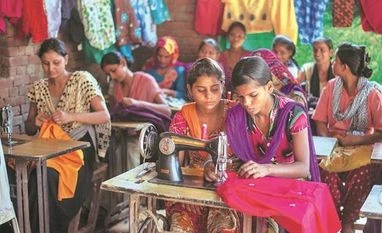
labour, tailoring, women workers
Samreen WaniSachin P Mampatta
1 min read Last Updated : Mar 05 2023 | 10:15 PM IST
Government data shows better headline employment figures, but some numbers are a cause for concern.
 
The unemployment rate at 4.1 per cent for 2021-22 is lower than 5.8 per cent witnessed in 2018-19, according to the latest Periodic Labour Force Survey (PLFS) annual report for the 12 months ended June 2022. The nature of this pick-up in employment shows lingering effects of the Covid-19 pandemic.

The share of manufacturing in employment has risen since the previous report, but at 11.6 per cent it is lower than the 12.1 per cent seen in 2018-19. People often turn to farming when other jobs are not available. The share of agriculture is also higher at 45.5 per cent in 2021-22 compared to 42.5 per cent in 2018-19.


The report classifies a larger share of people as self-employed. A smaller segment has jobs that provide regular salary or wages. The share of self-employed persons in 2021-22 is 55.8 per cent, compared to 52.1 per cent in 2018-19. The share of those getting a regular wage or salary has dropped to 21.5 per cent from 23.8 per cent in the same period.


Those with a regular wage have fewer benefits from their employers. A greater share of them has no social security benefit than in 2018-19.


The dependency ratio has shown an uptick. It is a measure of the working-age population relative to those who are dependent on them, suggesting more pressure on the employed amid recent economic turmoil.


Some of the signs of this distress are perhaps also seen in more women looking for any work they can find, reversing many years of a falling female labour force participation rate. Though it’s still harder for women to find work than men, participation rates appear more pronounced in rural rather than urban areas.


The participation rate includes those looking for work in addition to those working. The unemployment rate is a measure of those who are unemployed among the people available for work. The unemployment rate is higher among urban women as was the case before the pandemic.

One subscription. Two world-class reads.

Already subscribed? Log in

Subscribe to read the full story →
*Subscribe to Business Standard digital and get complimentary access to The New York Times

Smart Quarterly

₹900

3 Months

₹300/Month

SAVE 25%

Smart Essential

₹2,700

1 Year

₹225/Month

SAVE 46%
*Complimentary New York Times access for the 2nd year will be given after 12 months

Super Saver

₹3,900

2 Years

₹162/Month

Subscribe

Renews automatically, cancel anytime

Here’s what’s included in our digital subscription plans

Exclusive premium stories online

  • Over 30 premium stories daily, handpicked by our editors

Complimentary Access to The New York Times

  • News, Games, Cooking, Audio, Wirecutter & The Athletic

Business Standard Epaper

  • Digital replica of our daily newspaper — with options to read, save, and share

Curated Newsletters

  • Insights on markets, finance, politics, tech, and more delivered to your inbox

Market Analysis & Investment Insights

  • In-depth market analysis & insights with access to The Smart Investor

Archives

  • Repository of articles and publications dating back to 1997

Ad-free Reading

  • Uninterrupted reading experience with no advertisements

Seamless Access Across All Devices

  • Access Business Standard across devices — mobile, tablet, or PC, via web or app

Topics :CoronavirusStatsGuruLabourerUnemployment in India

Next Story



