Structural problems in India's agri-markets were starkly revealed in 2018

The tone for the year was set by the massive farmers' agitation in Mandsaur district of Madhya Pradesh in 2017, in which five farmers were killed
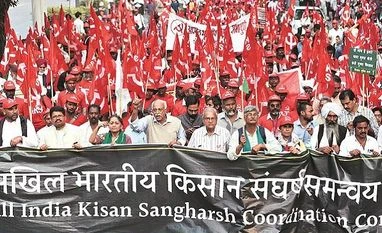
farmers protest
Unity is strength: But it would be premature to expect a major policy shift or a sustained political will in favour of the farmers
Sanjeeb Mukherjee
Last Updated : Dec 28 2018 | 12:01 AM IST
With production steadily outstripping demand over the past few years, farmers found themselves squeezed between falling prices and high debt burdens. Domestic markets are controlled by a middleman monopoly and export markets are restricted, so the government’s options for boosting prices were narrowed to raising procurement prices, which had little traction.  

The tone for the year was set by the massive farmers’ agitation in Mandsaur district of Madhya Pradesh in 2017, in which five farmers were killed. 

Sensing a growing constituency, political parties were mobilised in 2018 with an eye on the polls in Madhya Pradesh, Rajasthan and Chhattisgarh, each of which has a substantial farming community. 

In March, thousands of farmers and labourers marched from Nasik to Mumbai. The march, one of the biggest in the past four years, highlighted the stark rural-urban divide. 

Then, between June 1 and 10, observing the one-year anniversary of the Mandsaur firing, several thousand farmers in Madhya Pradesh, Haryana, Punjab and Rajasthan went on a 10-day strike. In the following months, farmers’ agitation became the new normal. 

In July, thousands of milk farmers protested in Maharashtra and Delhi, while on October 2  sugarcane growers of Uttar Pradesh blocked roads to Delhi demanding quicker clearance of long pending cane dues. 

The All India Kisan Sangharsh Coordination Committee (AIKSCC), a grouping of over 200 farmers’ organisations, launched a four-month long agitation programme, which culminated in a big rally in Delhi on November 29 that was attended by leaders of almost all major Opposition parties including Congress President Rahul Gandhi. Judging from the results of the Assembly elections, loan waiver promises have worked at the hustings. Whether this helps farmers in the longer run will be clear with time.

One subscription. Two world-class reads.

Already subscribed? Log in

Subscribe to read the full story →
*Subscribe to Business Standard digital and get complimentary access to The New York Times

Smart Quarterly

₹900

3 Months

₹300/Month

SAVE 25%

Smart Essential

₹2,700

1 Year

₹225/Month

SAVE 46%
*Complimentary New York Times access for the 2nd year will be given after 12 months

Super Saver

₹3,900

2 Years

₹162/Month

Subscribe

Renews automatically, cancel anytime

Here’s what’s included in our digital subscription plans

Exclusive premium stories online

  • Over 30 premium stories daily, handpicked by our editors

Complimentary Access to The New York Times

  • News, Games, Cooking, Audio, Wirecutter & The Athletic

Business Standard Epaper

  • Digital replica of our daily newspaper — with options to read, save, and share

Curated Newsletters

  • Insights on markets, finance, politics, tech, and more delivered to your inbox

Market Analysis & Investment Insights

  • In-depth market analysis & insights with access to The Smart Investor

Archives

  • Repository of articles and publications dating back to 1997

Ad-free Reading

  • Uninterrupted reading experience with no advertisements

Seamless Access Across All Devices

  • Access Business Standard across devices — mobile, tablet, or PC, via web or app

Next Story



