Urjit Patel cites 5 levies on capital. Does he want LTCG tax scrapped?
'The taxation on capital in India is from several sources and I think that then at the marginal rate, it adds up'
Press Trust of India Mumbai Amid controversy over the government proposal to tax long term capital gains (LTCG) from equities, RBI Governor Urjit Patel said on Wednesday that there are five different levies on capital which impact investments and savings.
There is the corporate tax on companies, dividend distribution tax, a tax for dividend income above Rs 10 lakh, a securities transaction tax and also capital gains tax which already exist in the economy, he said.
"There are five taxes on capital and that would obviously also have an impact on investments and savings decisions," Patel told reporters at the customary post-policy review meet at the RBI headquarters here.
He was answering a query on investment to GDP ratio being subdued.
"The taxation on capital in India is from several sources and I think that then at the marginal rate, it adds up," he added.
The government proposal in Union Budget 2018-19 to impose 10 per cent LTCG tax on holding a security for over a year has not gone down well with the stock investor community.
Patel said there is sizable scope for the investment to GDP ratio to improve and pointed out to increase capacity utilisation levels and an improvement in the credit offtake to double digits as "discernible" signs which make him confident of an increase in the key ratio.
He further said there are significant deviations from fiscal stance would make matters more challenging for RBI.
Presenting the budget earlier this month, Finance Minister Arun Jaitley projected a higher fiscal deficit of 3.5 per cent of the GDP for 2017-18, as against the target of 3.2 per cent, on account of GST implementation and deferment of spectrum auction.
The fiscal deficit or gap between total expenditure and revenues has been pegged at 3.3 per cent as against FRBM mandate of 3 per cent.
He also said that RBI will continue sharing dividend with government in a mechanical way as per the fiscal year.

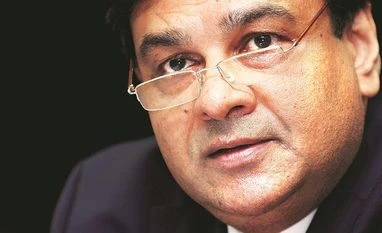 "Urjit Patel cites 5 levies on capital. Does he want LTCG tax scrapped?")


