We will increase local content in defence equipment to 60% by 2020: Manohar Parrikar
Interview with Defence Minister
Business Standard Defence Minister
Manohar Parrikar talks about unified command structure, the Pathankot incident and his journey as a Union Minister so far
As Guest of Honour at the Business Standard Annual Awards 2015 function, Defence Minister Manohar Parrikar's simplicity, honesty, intellect and wit in a question and answer session impressed captains of industry. Excerpts.
What is the difference between being the Defence minister of India and the Chief Minister of Goa? Well, I had to move to New Delhi from a nice place like Goa. The CM is like a king of the state… even if you have a small house, it's your own house. The new job has a lot of power and responsibilities.
What has been your proudest moment in your tenure so far as Union Defence Minister? My proudest moment is yet to come. But one of the proudest moments was, of course, the successful operation of the Indian Army to avenge the death of 18 soldiers. It was swift without a single injury on our side. It was my proudest moment so far but I intend to do better than that.
What has been your biggest frustration so far as Defence Minister? It's difficult to say but I think for me a change in mindset is needed in New Delhi as we work in silos. Someone in the ministry will say we have to follow the rules and regulations whereas the armed forces there (at theborder) would be requiring the equipment urgently.
Why did the Pathankot incident happen? The terrorists could enter the station because there were trees outside the compound wall, almost touching our wall. So we raised the compound walls by 10 ft with wires but someone just climbs the trees on the other side and jumps to our side. When I asked why we did not cut the trees, I was told that it was someone else's property, and even when we got the property owner's permission to cut them, the forest department would not give permission. I was told that it is the same case in many places on the border. On the border, the enemy is not going to bother about environment concerns…
I think there has to be a right balance between development, security needs of the country and the environment.
China has just introduced an integrated theatre command structure. When can we expect a similar structure in India? It took the United States four years to implement this structure after eight to 10 years of deliberation. We have started the process and in a phase manner, we may achieve something like this. It may not be exactly like how it is in the US or China but this is under active consideration and discussion.
The domestic manufacturing of defence equipment has led to long delays and technical shortcoming.
We don't want to be the biggest arms importer, but our domestic manufacturing programme exposes us to higher costs, delays and shortcomings. How long will it take to change this? Local equipment supply is currently around 35 per cent and varies year to year. About 65 per cent of our equipment supply has imported component of which half is direct imports while the other half is indirect imports. By 2020, we aim to get this 65 per cent down to about 40 per cent. If we achieve 60 per cent of indigenisation, I think we can achieve a lot and that is possible. Some companies have initiated investments like the Tatas, Larsen & Toubro, Bharat Forge, and the Mahindras and I am sure we will be able to meet our goals.
How would you like to be remembered by your country? I have actually never thought about it. One thing I am very clear about and that is character is like a glass and once it develops a crack, one can never get it back. Some call me arrogant, while some call me moody, but I do have a sense of humour which I developed in IIT, and many a times I am misunderstood. So after coming to Delhi, my humour has also reduced a lot.

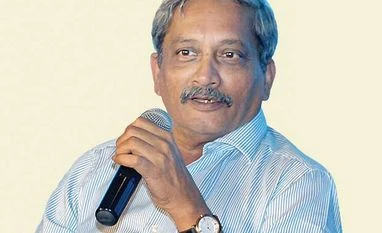 "We will increase local content in defence equipment to 60% by 2020: Manohar Parrikar")


