West Bengal's debt burden rises

West Bengal's market loan repayment obligation would be the highest among all states in 2017-18
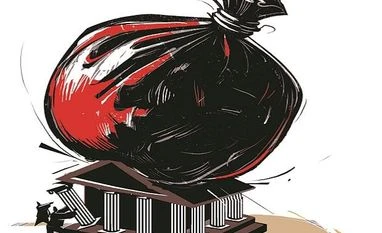
bad loans, debt, loan, banks, finance
Namrata Acharya Kolkata
Last Updated : Dec 26 2017 | 12:47 AM IST
West Bengal’s debt burden rose by a whooping Rs 1.16 lakh crore in the last five years. This year alone, so far the state government has raised close to Rs 26,000 crore, the second-highest among states, the Reserve Bank of India (RBI) data showed. In comparison, Maharashtra has been the top borrower so far, with its market loans close to Rs 35,000 crore, according to the RBI. Much of the increasing debt burden is on account of repayment of old loans.

What is more worrying for West Bengal is the upcoming high-interest debt repayment schedule. The state’s repayment burden on account of market loan alone would increase from Rs 3,200 crore in 2016-17, to Rs 11,610 crore in 2017-18 — over three times.

West Bengal’s total loan repayment burden this year is close to Rs 45,340 crore, according to data available with the state government.

On an average, the share of market loans or state development loans for West Bengal in its total debt burden has been close to Rs 3,000 crore every year. Thus, on account of a sudden jump in repayment obligation the state’s borrowing is likely to increase over the next three months.

Also, West Bengal’s market loan repayment obligation would be the highest among all states in 2017-18.

At the end of 2013-14, West Bengal’s total debt outstanding was close to Rs 2.50 lakh crore, which is expected to rise to Rs 3.66 lakh crore by the end of this financial year, the state government’s data showed. 

In 2003, the central government had announced a debt-swap scheme that allowed state governments to replace high-cost borrowings with lost-cost ones from small savings pool and market borrowing. That time West Bengal did not participate in the scheme. Starting 2007, states have been borrowing heavily through market loans. The borrowings were mostly through state development loans, which were of 10-year maturity, and mostly subscribed by public sector banks and other government undertakings.

Over the last few years, the West Bengal government has successfully increased its own tax collection through better compliance. In 2017-18, the state government has projected its own tax collection at Rs 55,787 crore against Rs 48,927 crore last year, a rise of about 14 per cent. In the last five years, West Bengal has seen a nearly 50 per cent increase in its own tax revenue collection. In 2012-13, its own tax revenue was Rs 32,808 crore. However, with high debt burden, an increase in tax collection had a negligible impact on state coffers.

One subscription. Two world-class reads.

Already subscribed? Log in

Subscribe to read the full story →
*Subscribe to Business Standard digital and get complimentary access to The New York Times

Smart Quarterly

₹900

3 Months

₹300/Month

SAVE 25%

Smart Essential

₹2,700

1 Year

₹225/Month

SAVE 46%
*Complimentary New York Times access for the 2nd year will be given after 12 months

Super Saver

₹3,900

2 Years

₹162/Month

Subscribe

Renews automatically, cancel anytime

Here’s what’s included in our digital subscription plans

Exclusive premium stories online

  • Over 30 premium stories daily, handpicked by our editors

Complimentary Access to The New York Times

  • News, Games, Cooking, Audio, Wirecutter & The Athletic

Business Standard Epaper

  • Digital replica of our daily newspaper — with options to read, save, and share

Curated Newsletters

  • Insights on markets, finance, politics, tech, and more delivered to your inbox

Market Analysis & Investment Insights

  • In-depth market analysis & insights with access to The Smart Investor

Archives

  • Repository of articles and publications dating back to 1997

Ad-free Reading

  • Uninterrupted reading experience with no advertisements

Seamless Access Across All Devices

  • Access Business Standard across devices — mobile, tablet, or PC, via web or app

Next Story



