
World food price index jumps in November to almost six-year high - FAO
Vegetable oil prices led the upward charge in the overall index, surging 14.5% month-on-month.
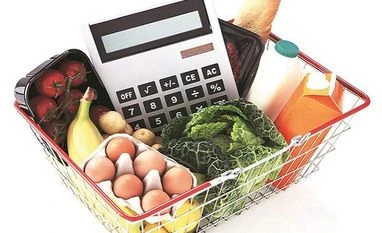 "World food price index jumps in November to almost six-year high - FAO")
Explore Business Standard
Vegetable oil prices led the upward charge in the overall index, surging 14.5% month-on-month.
World food prices rose for a sixth month running in November, hitting almost a six year high with the index posting its biggest monthly increase since July 2012, the United Nations food agency said on Thursday.
The Food and Agriculture Organization's food price index, which measures monthly changes for a basket of cereals, oilseeds, dairy products, meat and sugar, averaged 105.0 points last month, versus a slightly revised 101.0 in October.
The October figure was previously given as 100.9.
The Rome-based FAO also said in a statement that worldwide cereal harvests remained on course to hit an annual record in 2020, even though it trimmed its forecast for a third month running.
Vegetable oil prices led the upward charge in the overall index, surging 14.5% month-on-month, thanks largely to a rally in palm oil prices tied to a sharp fall in global inventories.
The cereal price index posted a more modest 2.5% rise in November from the month before, some 19.9% above its value a year earlier. Wheat export prices were pushed higher as a result of "reduced harvest prospects" in Argentina, while maize prices were lifted partly by lower crop forecasts in the United States and Ukraine. Rice prices held steady.
Average sugar prices increased 3.3% from October amid fears of a future shortfall in global production as poor weather hit crop prospects in the European Union, Russian and Thailand. The dairy index climbed 0.9% on the month to a near 18-month high, driven in part by firmer butter and cheese prices.
The meat index also pushed up 0.9%, ending a run of nine consecutive monthly declines, but is down 13.7% on the year.
FAO revised down its forecast for the 2020 cereal season for a third month running, cutting it to 2.742 billion tonnes from a previous 2.75 billion tonnes. However, this still represents a record high and is 1.3% above last year's level.
"Looking further ahead, planting of the 2021 winter wheat crop in the northern hemisphere is underway, and sowings in several major producing countries are foreseen to increase driven by remunerative prices, although recent dry weather could curb planting expansions and hinder yields," FAO said.
The forecast for world cereal utilisation in 2020/21 was put at 2.744 billion tonnes, little changed from the previous estimate and up 1.9% from the 2019/20 level.
The forecast for world cereal stocks by the close of seasons in 2021 was 866.4 million tonnes, down 9.6 million tonnes from the previous estimate posted last month.
"At this level, the global cereal stock-to-use ratio would decline from 31.8 percent in 2019/20 to 30.7 percent in 2020/21, a five-year low but still a relatively comfortable level," FAO said.
(Only the headline and picture of this report may have been reworked by the Business Standard staff; the rest of the content is auto-generated from a syndicated feed.)
First Published: Dec 03 2020 | 2:45 PM IST


