Worst is over for PSU banks, says Sinha at Gyan Sangam
RBI says banks have enough headroom to raise capital
BS Reporters New Delhi Demonstrations outside the State Bank of India Academy at Gurgaon in protest against the government's plans to privatise IDBI Bank had no perceptible impact on the second edition of Gyan Sangam, which kicked off on Friday.
While some of the officers continued to protest, bankers and officials of the Reserve Bank of India (RBI) as well as the finance ministry continued to debate consolidation and asset quality issues of the lenders in the banking sector in closed rooms at the two-day event, of media gaze.
Credit growth, risk management, technology and stress in the banking system were the other discussion points the bankers brainstormed in their respective groups.
Minister of State for Finance Jayant Sinha, who inaugurated the Sangam, took pains to point out that the worst was over for banks as the pace of growth in stressed asset in the system had stabilised. "There was also the asset quality review undertaken by the RBI in collaboration with the government. We got a system-wide view of stressed assets in the banking system. We have a very good sense of the magnitude of stressed assets and believe they totalled about Rs 8 lakh crore, or 11.24 per cent," Sinha said.
The finance ministry was working with RBI to work on a resolution for stressed asset. "As far as stressed assets are concerned, it is a continuous process that will last till March 2017 in terms of recognition, classification and resolution. There are various mechanisms created and strengthened," he added.
RBI Governor Raghuram Rajan also made a presentation on asset quality review of banks. The contents were kept a secret.
To provide cushion to banks' balance sheets saddled with bad loans, the ministry had decided to infuse capital of Rs 25,000 crore in this Budget. Banks said the capital allocation promised might not be enough. RBI differed. The banking regulator said banks had enough avenues to raise capital and, therefore, the amount allocated by the government would be enough.
Sinha said banks would be given additional capital if required.
Later, Financial Services Secretary Anjuly Chib Duggal addressed a press conference and gave a detailed agenda of the Gyan Sangam.
Chief Vigilance Commissioner K V Chowdary cautioned bankers to be more vigilant and do due-diligence more carefully while giving loans.
Global consultancy firm McKinsey made a presentation. Last year, based on the suggestions received at Gyan Sangam last year, the government came out with a strategy, Indradhanush, to revive public sector banks.

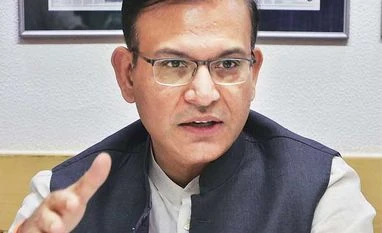 "Worst is over for PSU banks, says Sinha at Gyan Sangam")


