
WTO deal clinched without any compromise: Sitharaman
The WTO, at a special meeting of the General Council, signed the much-awaited Trade Facilitation Agreement
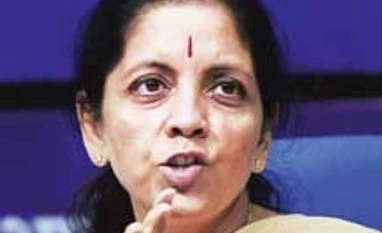 "WTO deal clinched without any compromise: Sitharaman")
WebinarsNew
Deep DiveNew
Explore Business Standard
The WTO, at a special meeting of the General Council, signed the much-awaited Trade Facilitation Agreement
The General Council Decision on Public Stockholding for Food Security Purposes is a new, unambiguous decision. "We have accomplished this without any concessions, compromise or new conditions," Sitharaman told Lok Sabha today.
The WTO, at a special meeting of the General Council, signed the much-awaited Trade Facilitation Agreement (TFA) while simultaneously clarifying the ambiguity on the so-called 'Peace Clause' for food stockpiling.
"WTO deal allows a mechanism for developing nations like India to continue with public stockholding programme without any challenge," added Sitharaman.
The WTO, on Thursday, also took the decision to arrive at the permanent solution, which entails amendment to the contentious Agreement on Agriculture (AoA), by December 2015 from the earlier deadline of 2017, agreed in Bali.
"The indefinite continuation of the waiver mechanism ensures the interest of the WTO membership in expeditiously working towards a permanent solution and protects us from the risk of having to accept an unsuitable solution under the threat of a limited duration peace clause coming to an end," she added.
"We were never alone or isolated, even though not many chose to - or were in a position to - speak up in support of India?s stand. I know from my interactions with several of my counterparts over the last few months that our stand resonated widely because we were fighting for a just cause. India is grateful for their support," Sitharaman said.
The 'Peace Clause' or interim measure to the issue will not only immune India from legal challenges but will also give the freedom to subsidise the farmers without being restricted by the prescribed WTO limit.
India had been insisting on clarifying the deal that was reached in Bali last year on the food security 'Peace Clause.' The Bharatiya Janta Party government that came to power in May this year, had demanded that the 'Peace Clause' be extended until a permanent solution to the food stocks issue is achieved.
On the other hand, the TFA, which is now up for ratification, is the first such multilateral deal reached in the history of WTO. The deal is expected to inject $1 trillion into the global economy while creating 21 million jobs by way of reduction in transactions costs and easing of global customs rules.
"WTO is back on track. We have delivered today on a promise we made in Bali. Now let's make it count ... On public stockholding we are committed to following an accelerated timeframe," said WTO director general Roberto Azevêdo on Thursday.
First Published: Nov 28 2014 | 5:22 PM IST


 Connect with us on WhatsApp