Chinese smartphone manufacturer Xiaomi plans to replicate its famed Just-in-Time model for improved supply chain management. This would enable retailers to order products on a daily basis and hence, cut down on inventory cost.
“We are a company which works on a wafer-thin margin. The just-in-time model will allow us to reduce the inventory and reduce the working capital margin,” said Manu Jain, head of India operations.
The company has intiated the plan on a pilot basis in 10 cities and aims to increase it to 10,000 by year-end. “Every week, we are adding two to three cities,” he said.
Under the traditional inventory management techniques, typically utilised by major manufacturers, there remains a multi-level distribution channel, maintaining which increases the cost of the product.
“The retailers are forced to hold inventory which ultimately results in increase of final price for the product,we could lower the price of the product in this way and pass on the benefit to the consumers,” said Jain. According to Jain, there is no difference between the price of Xiaomi products in online and offline format. “Our effort is tomake the offline model as cheap as possible,” said Jain. Thecompany had entered Indiain December 2014 and made its way through the pecking order of the smartphone market by perfecting the online-exclusivemodel on the internet. According tomarket research firm IDC, Xiaomi has a 4 percent share of the Indian smartphonemarket.The company sells its products through the e commerce platforms Flipkart, Snapdeal andAmazon beside its own e-commerce platform- Mi.com.
In order to boost its brickand mortar sales, the company recently partnered Redington to make itssmartphones available across physical retail stores. Xiaomi also ventured into brick andmortar stores by partnering with retail chain The Mobile Store and privatetelecom operator Bharti Airtel to reach out to more consumers. “Atpresent less than 10 percent of or sales come from offline model, our target isto increase it to 25-30 percent in near future,” Jain said.Thecompany whose sales have crossed three million mark has recently tied up withFoxconn to manufacture its products in India which according to Jain is allowing the company totrim down logistic cost.” Assembling in India has allowed us to reduce theforecast from four weeks to two weeks which helps in saving cost,” he said.

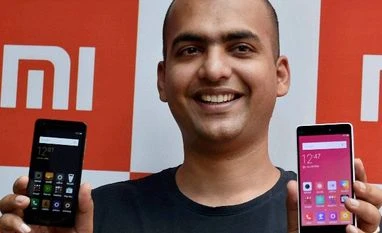 "Xiaomi to replicate its just-in-time model in India")


 Connect with us on WhatsApp