Home / Companies / News / Call drops: Trai set to retest operator claims in Delhi, Mumbai
Call drops: Trai set to retest operator claims in Delhi, Mumbai
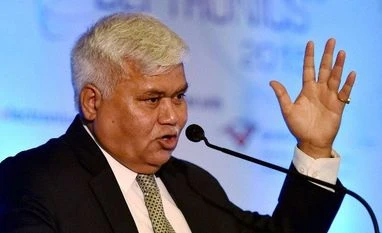
TRAI chairman R S Sharma met all telco CEOs on call drops
Chairman of Telecom Regulatory Authority of India (TRAI), Ram Sewak Sharma, addresses during the inauguration of the "Deftronics India 2015" at Pragati Maidan, in New Delhi
The Telecom Regulatory Authority of India (Trai) will in the next fortnight do tests here and in Mumbai on whether telecom operators are improving their networks to arrest the rise in call drops.
“We will undertake another drive test to measure any improvement. All the telcos said (at a meeting on Wednesday) that they are taking steps... this should reflect in the drive test,” Trai chief R S Sharma said after meeting the chief executives (CEOs) of all the too companies.
This was the first meeting of the CEOs with Sharma after he took charge as chairman last month. He said the service providers were also concerned and related what they were doing. Operators will also have to disclose their network capacities, he said. Trai says it will support operators in creating awareness over radiation norms from towers and about how it does not see health hazards in this regard.
Last Friday, Trai issued a consultation paper on call drops, proposing that mobile users be compensated for each one they suffer. According to Trai, users should not be charged for calls that get dropped within five seconds. If it gets dropped after five seconds, the last pulse of the call that got dropped should not be charged.
In June-July, Trai conducted drive tests on certain routes in Mumbai and Delhi and found the drop rates of most service providers were higher than the benchmark it had set. The call drop rate ought not to exceed two per cent.
Trai says between April and June 2013 and January and March 2015, the growth in minutes of usage (in GSM networks) has been 12 per cent and increase in second generation (2G) data usage 106 per cent. The number of 2G-compliant base transceiver stations grew eight per cent. Growth in 3G data was 252 per cent; the number of nodes rose 61 per cent in the period.
Investment made in network infrastructure (other than radio spectrum) in wireless access services rose 4.6 per cent from Rs 202,366 crore in FY13 to Rs 211,691 crore in FY14. Minutes of usage grew 6.8 per cent. “Investment has not kept pace with usage. Thus, prima facie, it appears that lack of investment in network infrastructure by wireless access providers might be one of the main reasons for the problem of call drops,” Trai has said. Telcos have been blaming limited spectrum, delay in installing tower sites as the main reason for rising call drops.

 "Call drops: Trai set to retest operator claims in Delhi, Mumbai")


