'Common carrier' move will hit pipeline development: IOC
If implemented, IOC would have to share around 38 mn tonne of its pipeline capacity across a 5,900 km long network with competitors
BS Reporter New Delhi The Petroleum and Natural Gas Regulatory Board (PNGRB)’s move to declare 20 Indian Oil Corporation (IOC) pipelines, accounting for about half the company’s pipeline capacity of 80 million tonnes (mt), as “common carrier” will hit refinery and pipeline development and impact the entire sector, the fuel retailer has said.
If the proposal is implemented, IOC will have to share 38 mt of its pipeline capacity across a 5,900-km network with competitors, including private firms such as Reliance Industries and Essar. These pipelines connect IOC’s refineries with its marketing depots across the country.
The company says its pipelines are for captive use; these are “dedicated pipelines” under the PNGRB Act of 2006 and the PNGRB regulations of 2010. Without such dedicated pipelines, it says, no refinery can be conceptualised and implemented.
ALSO READ: IOC Chief: Disparity in global, domestic oil prices due to fixed costs “If a pipeline originating from a refinery isn’t treated as a dedicated pipeline, it would be difficult, if not impossible, to visualise how a refinery can be planned with certainty on the availability of pipeline for evacuation of the refinery’s products,” it has said. Last month, PNGRB had issued notices and sought responses from IOC and other affected parties — Bharat Petroleum Corporation Ltd and GAIL. The company has argued in case a third party is authorised to lay a pipeline for such a planned refinery and fails to do so, it wouldn’t be possible for the refinery to operate and the entity wouldn’t be able to evacuate products. “This situation will severely impact product availability in the country and be against public interest,” IOC said. The oil marketing company has told PNGRB its pipelines are laid for the transfer of its own products to its depots and, therefore, do not entail any “consumer”. Also, because there is no sale involved, there cannot be any resale. The concept of ‘common carrier’ is defined in section 2 (j) of the 2006 Act. It says: “Common carrier means such pipelines for transportation of petroleum, petroleum products and natural gas by more than one entity, as the board might declare or authorise from time to time on a non-discriminatory open access basis, but does not include pipelines laid to supply petroleum products or natural gas to a specific consumer or crude oil.”
IOC argues a pipeline can de declared a ‘common carrier’ only when there is more than one consumer. It says its pipelines cater exclusively to its own logistic requirements.

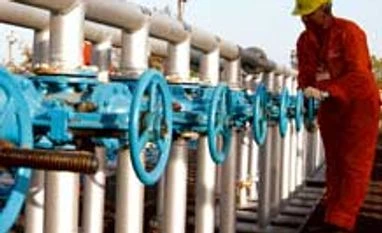 "'Common carrier' move will hit pipeline development: IOC")


 Connect with us on WhatsApp