After a five-year stint as chairman of the Unique Identification Authority of India (UIDAI),
Nandan Nilekani is set to contest the Lok Sabha elections from the Bangalore South constituency on a Congress ticket. He will be up against the Bharatiya Janata Party’s H N Ananth Kumar, who has won five times consecutively. In an interview with Bibhu Ranjan Mishra and Mahesh Kulkarni, Nilekani talks about how he intends to bring about change. Edited excerpts:
One of the pioneers of the information technology revolution in India, you are being considered a role model by many. Do you have a role model in politics? I am learning from politics. I won’t say I have a role model. I think there is a role for politicians with problem-solving backgrounds. When I look at my life, I have been able to do transformational things. Infosys was one journey; Aadhaar was another. BATF (Bangalore Agenda Task Force), where I worked with politicians and bureaucrats between 1999 and 2004, was also one. I think Indian politics is ready to accept problem-solving politicians, people who get into the integrity of things to resolve those. It is a good model of politics and I hope to get a good response.
Who are the politicians you are referring to? I think all the founding fathers of this country have been problem-solving politicians. I don’t want to give specific names. I just want to focus on being a good problem-solver. The focus is on carving a style of politics that is about problem-solving; a style that allows people to feel here is somebody who will work with honesty and hard work to make a difference. That is what I believe in.
What does the Congress mean to you? I believe when you enter politics, you enter a political party that has principles and an ideology that match your beliefs. Only the Congress satisfies me…its policies of secular and liberal values, according to which every Indian, no matter what caste, creed, religion and part of India he/she is from, is treated as an Indian. That’s why the Congress is important to me. And, it is the Congress that gave me the opportunity to lead the Aadhaar project. So, it is my natural choice.
Has your association with the United Progressive Alliance (UPA) government as UIDAI chairman influenced your decision to contest on a Congress ticket? The Congress gave me that opportunity and backed me to the hilt, politically. It has certainly been important for me to take this decision. What Aadhaar has taught me is I need to be involved in politics full-time to bring about changes.
What lessons from the corporate world are you bringing into politics? There are three different experiences I can think of. First, from my experience of about 30 years at Infosys, it is about leading teams, setting a goal and vision, doing things professionally and on time, and achieving things. From BATF, I learnt the integrity of urban governance and had a first-hand experience of how to resolve civic issues. Aadhaar showed me how large, complex government projects that cut across many governments and institutions can be executed by consensus-building. Each of these experiences has given me different dimensions of skills that are relevant to this new path.
In the corporate world, especially at Infosys, which you co-founded, you were known as a great consensus-maker and a great sales person. How much of that have you been able to use in politics? I have always been a team player; I always enjoyed working with other people because I believed all have to work together to resolve problems. So, part of it is about bringing people with diverse backgrounds, different ideas and ambitions together and getting them to agree on something common. And, to an extent, politics is the ultimate forum for consensus-building.
There is speculation in political circles the reason why the Congress brought you into politics is it wants a consensus-builder as a possible prime ministerial candidate in the event of the UPA not getting a clear majority. I think I have a very limited goal. I have five weeks to work non-stop, day and night, doing door-to-door campaigning, meeting people, convincing them about my candidature and my plans and requesting them to vote for me. That’s what I am thinking about now.
What are your strengths and weaknesses? Obviously, I am new to politics, which is a very different and demanding activity. You have to be available to your voters 24x7. I also bring fresh thinking into politics because I am not coming for any personal gain. I have got everything in my life. I am coming with a genuine desire to contribute to the city I love (Bangalore).
What is your assessment of your constituency? In what areas has Ananth Kumar failed, areas in which you can contribute?
There is a fatigue factor with the incumbent MP (Member of Parliament). Whenever I ask people, they are unable to enumerate what he has done. So, I think there is a big desire for change. They are looking for someone who is hard working, honest, effective and committed, one who will keep his promises.
What is specific agenda for Bangalore South?
I am looking at two broad areas: infrastructure such as water, roads, traffic management, garbage removal, and creating opportunities. When I meet people, they talk about education and creating jobs, among other things. Since I have been a job-creator, I understand that language.
Do you think populist measures such as giving rice or dal at Re 1/kg can help alleviate poverty and improve the lives of the common man?
Broadly, what I believe in is what the Congress believes in. On one side, we have an obligation to the most vulnerable parts of society?making sure we provide rights and entitlements so that they get basic amenities. Second, we have to create an economy in which people with aspiration can rise and meet those.
How will you address the burning issues of price rise and corruption?
The Karnataka government has the Re 1/kg-rice scheme. The number of LPG (liquefied petroleum gas) cylinders have been increased from nine to 12. So, life is much better for the common man now.
Earlier, you had said you didn?t want to be indebted to anybody by accepting their money for poll campaigning. Why?
The way people are contributing to my campaign is by giving their time. There is a spontaneous group of volunteers called ?Together with Nandan?. There are more than a thousand people who have joined this and they are working on their own, leading my campaign.
Please give a few examples of such people.
A young lady received an offer from McKinsey, but she postponed it so that she could spend time as a volunteer in my campaign. There is another person, one from Stanford. Because of the interesting nature of what we are doing and because they all know my background, a lot of people are turning up to volunteer.

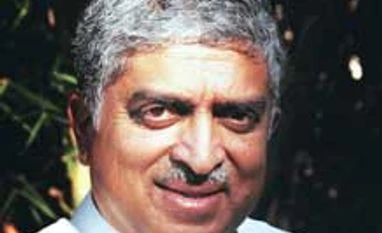 "Country needs politicians with problem-solving backgrounds: Nandan Nilekani")


 Connect with us on WhatsApp