"I blow the whistle, the election process begins. I blow the whistle once again and the process ends. I am just a referee." Humble words from a man who is in charge of overseeing a possible regime change in India. But however facetiously he may describe his onerous task, Chief Election Commissioner Veeravalli Sundaram Sampath is the man of the moment, somebody who is responsible for pointing 814 million Indians towards the polling booths in April and May to choose a new Lok Sabha.
"My primary job is to register voters and get them to the polling stations," says Sampath in his spacious first-floor office at the brick-red Nirvachan Sadan, close to Parliament House. The 64-year-old has just come back after announcing elections to 543 Lok Sabha seats and three assemblies of Andhra Pradesh, Orissa and Sikkim and is busy fending off news television reporters who all want to meet him separately for sound bites. Seeing the barrage of media people and guests waiting outside his office, Sampath politely turns down this correspondent's request for time, but later acquiesces to a few minutes of questioning.
In the past five years since he joined the Election Commission in the middle of the 2009 Lok Sabha elections, Sampath has never received as much attention as now. Unlike other constitutional authorities such as the Comptroller and Auditor General and the Central Vigilance Commissioner, Sampath has limited himself to the boundary of his office. He has never sought to hog the headlines over controversial issues like the inclusion of the "None of the Above" option on voting machines, on the use of money and muscle power in elections or even on the controversy over opinion polls. Whatever thoughts he and the commission had on these were quietly forwarded to the Union government, far from the scrutiny of the media.
Even now, when he is incessantly harangued about the prolonged nine-phase, month-and-a-half-long election schedule, he doesn't raise his voice. Soft-mannered as always, he tries to reason with his questioners: "It is a misnomer." Why can't the media appreciate that it is for the good of the common man? We are not putting any extra burden on the voters, who just have to vote once. In fact, managing the staff and security personnel is our headache alone."
Pressed to justify the long electoral process, Sampath says, "People point out we are holding polls on two days in a small state like Tripura when there are only two parliamentary constituencies. But they don't understand the problem we face. First, there are security constraints, and then we had received demands to not hold elections on Sundays. We have to consider many things in planning a poll."
Till May 16, when the results will be announced, Sampath will be one of the most important men in India. Along with the other two election commissioners, HS Brahma and Nasim Zaidi, he will decide which candidate is violating the code of conduct or when an electoral malpractice has occurred. He can even pull up candidates, whether they are heavy-weight politicians or small fry, for infringing poll norms. All candidates will be wary of his eye on their campaign expenses. During his reign, so to say, no major policy decision can be passed by the states or the Union governments without his say. He is indeed the man of the moment.
For the 1973-batch Indian Administrative Services (IAS) officer from the Andhra Pradesh cadre, however, all this is part of life as a bureaucrat. "I didn't lose sleep the night before announcing the poll schedule," he jokes. "I knew there is a mysterious force that will take care of things… and I am not talking of the security force deployed on the ground." In his earlier stints in various capacities in Andhra Pradesh and the Centre, he rarely gave press interviews, firmly believing he was only a facilitator of policies made by politicians.
When asked what he feels is his contribution to the electoral process, Sampath, who will remain at Nirvachan Sadan till January next year, says that although he has been giving a strong push to the electoral reforms process started by his predecessors, he personally took more interest in giving voters their photo identity document. As always, he is practical and focused on the details.

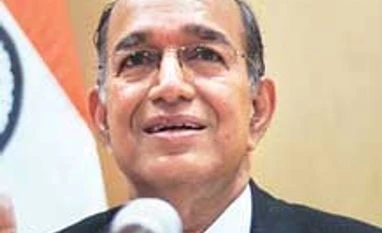 "<b>Newsmaker:</b> VS Sampath")


 Connect with us on WhatsApp