Pre-1950 borns may not get entry into Modi's Cabinet
Those born before that date may not find a place in it
Archis Mohan New Delhi A Narendra Modi-led council of ministers at the Centre is likely to have an entry barrier. Anyone born before Independence, or more specifically before 1950, may not find a berth in it.
A clear majority to the Bharatiya Janata Party (BJP) has meant the National Democratic Alliance (NDA) government will pursue the BJP manifesto, and will not draft any common minimum programme.
On Friday, Modi said at his victory rally in Gujarat that 2014 elections were the first after Independence in which leaders of the BJP and Congress were those born after 1947. In Varanasi on Saturday, Modi said the elections were a turning point in India's history "as for the first time the leadership is going to fall in the hands of a generation which was born in the post-Independence era." Modi was born in 1950.
Party sources said 1950 could be the cut-off for all who make it to the cabinet. Only those born after 1950 may be accommodated. This would not only ensure younger people make it to the council but also seniors L K Advani, Murli Manohar Joshi and Venkaiah Naidu are given advisory roles or gubernatorial assignments.
Sources said Modi, who landed in Delhi on Saturday morning and visited Varanasi, will spend the next few days in Delhi's Gujarat Bhawan meeting people and consulting advisors. An associate of his said Modi was known to work long hours and had a knack for being a patient listener and getting into details of any subject. "He will bring this trait in forming the next government," the associate said.
Sources refused to speculate on names in the cabinet but said it would be younger and smaller than UPA's.
A senior said the party was unlikely to draft any common minimum programme. "The government would be run on the BJP's agenda," the leader said. There is an understanding in the party Modi's Vadodara victory speech was a farewell one. He is likely to quit that seat and retain Varanasi's. Modi visited Varanasi on Saturday evening where he offered prayers at the Kashi Vishwanath Temple.
In the morning, Modi arrived in Delhi and was followed from the airport to the BJP office by supporters. Hundreds of supporters gathered at half a dozen spots along the route to cheer him.
In the afternoon, he attended the BJP parliamentary board meeting. Later, party president Rajnath Singh said the parliamentary party (all elected Lok Sabha members of Parliament (MPs) and Rajya Sabha MPs) will meet on Tuesday afternoon to elect its leader. "I don't need to tell you who this leader would be," Singh said, with a slight nod towards Modi, sitting next to him on the dais. He said the BJP had invited NDA partners to attend the meeting.
Singh said the swearing-in date of Modi as next prime minister and of the cabinet was yet to be fixed. Party sources said the ceremony may be held at the end of the next week. All NDA partners may hold their meeting on Wednesday after which the alliance would inform the President's House about having elected their leader. The President would then invite Modi to form the government.
The parliamentary board meeting started with Modi touching Advani's feet. Advani hugged him.
Modi, in Varanasi, spoke of the need to clean Ganga. "Five years from now, we will be celebrating the 150th birth anniversary of Mahatma Gandhi. A clean Ganga, a clean Kashi and a clean India would be the most befitting tribute to the Mahatma, who always laid great emphasis on cleanliness and hygiene," he said.
It said it was the first time in independent India a non-Congress party had got a majority. Singh acknowledged the hard work put in by all party workers as also support from "social and cultural organizations," a reference to the Rashtriya Swayamsevak Sangh (RSS). He said the BJP's success was due to it overcoming social and geographical boundaries.
The party appointed observers for BJP legislative parties meetings to elect their leaders in newly elected assemblies of Arunachal Pradesh, Odisha, Andhra Pradesh, Telangana and also to elect the leader and the next Chief Minister of Gujarat. Senior leaders Sushma Swaraj, Murli Manohar Joshi, Arun Jaitley, Nitin Gadkari, party's organising secretary Ramlal and others attended the meeting.

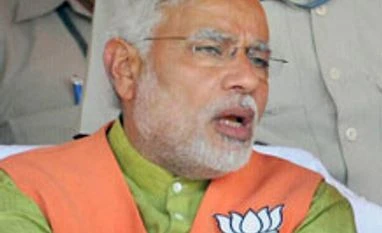 "Pre-1950 borns may not get entry into Modi's Cabinet")


 Connect with us on WhatsApp