Baghpat test case for strength of Uttar Pradesh's Opposition 'gathbandhan'

Ostensibly, what finally cemented the coalition was the outcome of the 2014 Lok Sabha elections in Baghpat: All of the Opposition put together polled only 131,393 more votes than BJP's Satya Pal Singh

Satyapal Singh
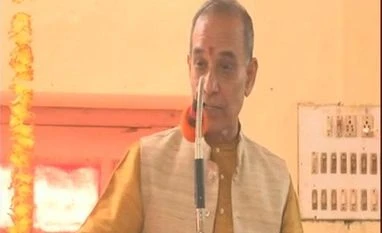
Satya Pal Singh, BJP MP from Baghpat. Photo: ANI
Radhika Ramaseshan Baghpat
5 min read Last Updated : Mar 26 2019 | 12:58 PM IST
Siddharth Jatav, a garment maker from Kuranagaon in West Uttar Pradesh’s Baghpat district, is a would-be entrepreneur. He’s over the moon because he was recently sanctioned a Rs 50-lakh loan under the Centre’s Startup India scheme to set up an oil mill in his village. He has picked up Rs 38 lakh out of the approved amount, keeping the rest in reserve. Full of beans, Siddharth, 41, has plunged himself in electioneering for the Opposition “gathbandhan” (alliance) in the Baghpat Lok Sabha seat on behalf of the Bahujan Samaj Party (BSP). “My oil mill can wait because first I have to see our candidate through,” he says.

“Our candidate” is 40-year-old Jayant Chaudhary, the son of Ajit Singh who heads the Rashtriya Lok Dal (RLD). He is the grandson of Chaudhary Charan Singh, who’s such a legend that local lore has it that he appears in people’s dreams on election-eve and asks them to vote the RLD. Despite Charan Singh’s collective apparition, Ajit Singh and Jayant lost their seats to the Bharatiya Janata Party (BJP) in 2014. This time, the force of arithmetic spurred the RLD to tie up with the BSP and the Samajwadi Party (SP) and, more importantly, work hard to ensure the numbers transmuted into electoral alchemy.

Asked why the boon from the Centre’s scheme didn’t draw him to the BJP, Siddharth’s answer was straight: “The Centre has not done me a favour. This is the least that (Narendra) Modi could have done to compensate for the loss I suffered during notebandi.” 

If history is a gauge, the “gathbandhan” ought to be riddled with contradictions, the greatest being the fact that for centuries the Jats were the oppressors of economically and socially weaker backward castes, as well as the Dalits. Charan Singh was a Jat and his heirs are identified with this largely prosperous community that was traditionally into agriculture. Until the BSP established itself as a force in UP, Dalits were never allowed to exercise their franchise freely by the Jats. “You are speaking of what happened 50 years back,” said Om Veer Singh Tomar, a Jat who is the principal of Baghpat’s DAV Inter College. “The Jats, Yadavs (the SP’s core vote base) and Dalits have common concerns, such as low or no payment for agricultural produce, the Goods and Services Tax, demonetisation, bad roads, and high power costs,” said Tomar.

Ostensibly, however, what finally cemented the coalition was the outcome of the 2014 Lok Sabha elections in Baghpat. The BJP’s Satya Pal Singh, a junior minister, polled 423,475 of the total 1,004,263 votes that were cast. Consider the votes that the BJP’s rivals secured to get the big picture. Ajit Singh, the RLD candidate, polled 199,516 votes; the SP’s Ghulam Mohammed got 213,609 votes; and Prashant Chaudhuri of the BSP netted 141,743 votes. The Opposition’s combined votes added up to 554,868 votes — 131,393 more than what Satya Pal got. A credible surmise was that while the SP got the Muslim and Yadav votes, Ajit Singh got nearly 80 per cent of the Jat votes, contrary to a popular notion that after the Muzaffarnagar communal violence, Jats embraced Hindutva, lock, stock and barrel. 

Does the impressive aggregate make sense on the ground? Sahapur-Badoli, a village of mixed castes but primarily Jat-dominated, illustrates new realities. Amit Tomar, 21, and Gaurav Tomar, 24, Commerce and BEd students, respectively, recalled that the highest number of Jats were enlisted in the UP police and as teachers in the state colleges when BSP President Mayawati was the chief minister between 2007 and 2012. “Yogi Adityanath (the current CM) only looks favourably at the Rajputs, while Akhilesh Yadav was pro-Muslims. So, if the Jats and Dalits were adversaries, as you say, would Mayawati have helped us,” asked Gaurav. 

But for village elders like Anangpal and Sudhir Tomar, both agriculturists, what rankled the most was National Highway 709-B, which traverses these parts more like an upgraded village “khadanja” road than the pride of their area as was billed by Satya Pal before the 2014 elections. Covered with treacherous pits left by the rains but unattended to, “for this NH alone, the BJP will not get my vote,” Anangpal said. NH-709-B echoes like an uncomfortable refrain in Baghpat. Devendra Sharma, the “pradhan” of Tyodhi village, called the highway an “eyesore” and claimed that if the Congress had fielded a candidate, the Brahmin votes would likely have gone to it. “I don’t have issues with the Congress,” said Sharma.

Among the other “charges” against the BJP were the Centre’s “inability” to repatriate black money from abroad, the “uneven” distribution of money under the PM-KISAN, hike in power tariff from Rs 1,000 to Rs 1,800 per month and more expensive fertilisers. Gajendra Singh, a farmer and secretary of the local Jat Mahasabha, said: “When I went to claim the first tranche of Rs 2,000 (under PM-KISAN), I was told that I was an income tax payee and did not qualify for it. I earn little but pay taxes out of sheer honesty. Why am I being punished for being tax-compliant?” 

Answering the accusations, an aide of the BJP MP who lived at Mavikala village, admitted that work on NH-709-B started just five months ago. “That was because the Akhilesh Yadav government refused to give a no-objection certificate,” he said. 

The aide conceded that Satya Pal Singh was not getting help from any of the BJP’s three area MLAs of Baghpat, Chhaprauli and Baraut or from the chairmen of the Chhaprauli and Baraut municipalities. All of them are from the BJP. “On the plus side, we have the vastly improved law-and-order situation to show. If 40 per cent of Jats are with us, we will win, though by a smaller margin. If not, God help us,” he said.


One subscription. Two world-class reads.

Already subscribed? Log in

Subscribe to read the full story →
*Subscribe to Business Standard digital and get complimentary access to The New York Times

Smart Quarterly

₹900

3 Months

₹300/Month

SAVE 25%

Smart Essential

₹2,700

1 Year

₹225/Month

SAVE 46%
*Complimentary New York Times access for the 2nd year will be given after 12 months

Super Saver

₹3,900

2 Years

₹162/Month

Subscribe

Renews automatically, cancel anytime

Here’s what’s included in our digital subscription plans

Exclusive premium stories online

  • Over 30 premium stories daily, handpicked by our editors

Complimentary Access to The New York Times

  • News, Games, Cooking, Audio, Wirecutter & The Athletic

Business Standard Epaper

  • Digital replica of our daily newspaper — with options to read, save, and share

Curated Newsletters

  • Insights on markets, finance, politics, tech, and more delivered to your inbox

Market Analysis & Investment Insights

  • In-depth market analysis & insights with access to The Smart Investor

Archives

  • Repository of articles and publications dating back to 1997

Ad-free Reading

  • Uninterrupted reading experience with no advertisements

Seamless Access Across All Devices

  • Access Business Standard across devices — mobile, tablet, or PC, via web or app

Next Story