Summer concert season ended before it began.
While sports leagues and restaurants try to figure out when they can reopen to the public, there’s growing recognition among music industry executives that concerts won’t be coming back anytime soon. In the past couple of weeks, festivals have cleared out of May and June, while those in July and August are just waiting to reschedule.
Outside Lands, a music festival held in San Francisco every August, is exploring a move to October or next year, according to Gregg Perloff, one of the festival’s organizers.
“The odds of it happening in August go down with each passing day,” Perloff said from his home in Lafayette, California.
“We have to have a situation where the public feels safe, we feel safe and the bands feel safe.”
“The live concert industry might be in the most difficult position of any industry in America,” Perloff said. “You never hear people talk about it. They talk about airlines. They talk about the auto industry. But the reality is they’ll be back in business way before the concert industry is back.”
The immediate impact has already been severe. Live music was one of the very first industries affected by the global health crisis. Many large states outlawed big gatherings on March 12, the same day an industry task force of concert promoters, talent managers and booking agents urged a moratorium on large events through the enough of that month.
“It’s a really tenuous time for a lot of companies,” said Andrew Morgan, a booking agent with Ground Control Touring. “We don’t have investors, we’re not publicly traded, 100 percent of our income is based on the income of artists.”
Many festivals have yet to cancel or postpone their events, including the Pitchfork Music Festival and Lollapalooza in Chicago, and Creamfields in the UK. It’s not hard to understand why.
Concert organizer Goldenvoice generates more than $100 million in revenue from Coachella, the largest music festival in the US Though the company canceled the original April date, it still hopes to hold it this year, in October.
“It’s not like we’ll have no shows, and then all of a sudden we’ll have a festival with 80,000 people.”
But agents and managers have begun to tell their clients not to expect to tour in 2020. Morgan has already rescheduled 13 tours.
While his client Angel Olsen is still scheduled to perform at the Pitchfork Music Festival in July, he has little confidence the event will take place. “It’s not like we’ll have no shows, and then all of a sudden we’ll have a festival with 80,000 people,” he said.
Most industry experts expect small shows to be the first to return, followed by large events next year. Perloff still has 120 events scheduled between now and the end of the year, some in a 500-capacity venue, others in a 2,800-person theater in Oakland, California, and others on a far larger scale.
The festivals are his biggest moneymakers. Outside Lands grossed $29.6 million in ticket sales last year for Perloff’s company, Another Planet Entertainment. Life Is Beautiful, an electronic festival it promotes in Las Vegas, grossed another $17.7 million. No decision has been about this year’s Life is Beautiful, which is slated for September.
But without a clear timeline from the government of when rules will relax, it’s hard for his company to market shows or to sell tickets to events. He has been in frequent communication with the offices of California Governor Gavin Newsom and San Francisco Mayor London Breed, and is now thinking of discussing some kind of federal support with Speaker of the House Nancy Pelosi.
Perloff is trying to avoid the worst-case scenario. While larger companies such as Live Nation and AEG have furloughed employees and cut salaries, Perloff has yet to trim his staff of 47. And while some ticket vendors refuse to make refunds for postponed or canceled events, he has said customers will get their money back for Outside Lands when his company decides what to do.
“We’re a very healthy company,” he said. “But no company can have it make sense for 16 months of no revenues.”


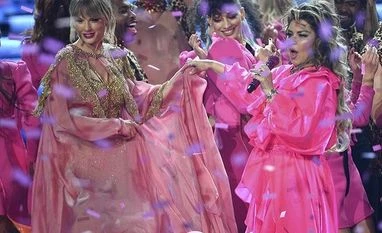 "The Music Industry's Lost Summer: No Bieber, No Swift and Mass Layoffs")









