A weak rupee holds RBI from cutting key rate
Future cuts to depend on durable receding of inflation; Wait for lower EMI gets longer
Manojit Saha Mumbai Despite the rate of headline inflation falling within its comfort zone in May, the Reserve Bank of India (RBI) on Monday decided to keep the key policy rate unchanged, mainly because of the rupee’s recent fall against the dollar. In the mid-quarter review of its monetary policy, RBI maintained the repo rate at 7.25 per cent. The cash reserve ratio — the proportion of deposits banks have to mandatorily park with the central bank in cash — was also left untouched at four per cent.
The Indian currency has depreciated more than 7.5 per cent against the dollar since May, due to heavy sell-off by foreign institutional investors on concerns the US Fed might lower the pace of its quantitative easing.
“Upside pressure on the way forward from the pass-through of the rupee’s depreciation and recent increases in administered prices and persisting imbalances, especially relating to food, pose risks of second-round effects,” RBI said while explaining Monday’s policy decision.
The biggest concern for RBI came from the external front. It observed capital flows, which met the external financing requirement in April and May, moderated in June. The trade deficit in May sharply rose to $20 billion, mainly on account of a 90 per cent increase in imports of gold and silver. RBI, however, acknowledged that gold imports might moderate soon, as the import duty on the yellow metal had been raised by two percentage points to eight per cent.
The central bank declined to give any indication on possible future rate cuts. It said: “Only a durable receding of inflation will open the space for monetary policy to continue to address growth risks.”
Banks were quick to point out that they would not cut lending rates immediately, as the cost of funds had yet to come down.
“Net interest margins are already under pressure. The cost of funds has yet to come down… certificate of deposit (CD) rates are still above eight per cent. More than Rs 3 lakh crore worth of CDs will be rolled over at this rate,” State Bank of India MD & CFO Diwakar Gupta told Business Standard, explaining why lending rate cut was not possible at this juncture.
India Inc also expressed its disappointment over the status quo.
“RBI’s decision to hold policy rate is disappointing. At a time when both growth and inflation dynamics call for an accommodative monetary policy, RBI has taken a cautious approach of attending to the prospect of a possible resurgence in inflation over reviving growth in the economy,” said CII Director-General Chandrajit Banerjee.
Market participants, however, expect RBI will cut rate as factors turn more favourable.
“We still believe the possibility of 50-75-bp rate cuts over the rest of the year remains. We also wouldn’t rule out the possibility of a couple of cuts in CRR as liquidity tightens sometime in the second half of the financial year,” said HDFC Bank Chief Economist Abheek Barua. RBI’s decision to hold policy rate is disappointing. At a time when both growth and inflation dynamics call for an accommodative monetary policy, RBI has taken a cautious approach of attending to the prospect of a possible resurgence in inflation over reviving growth in the economy,” said CII Director-General Chandrajit Banerjee.

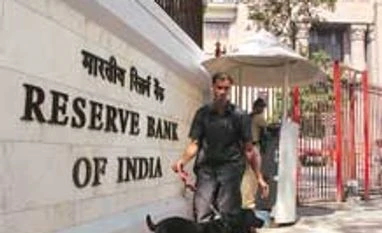 "A weak rupee holds RBI from cutting key rate")


 Connect with us on WhatsApp