The Reserve Bank of India (RBI) unexpectedly kept the rates unchanged on Wednesday, despite calling current inflation too high, citing the prospect of easing retail prices and its concerns about the weak domestic economy.
Here is what bankers, economists and analysts had to say about the RBI's move:
Inflation may not spike sharply despite the Reserve Bank of India (RBI) keeping the repo rate unchanged in its mid-quarter monetary policy review today.
"For rate hike this time the premise was on a particular (inflation) number that came in. I believe it (inflation number) corresponded to a transitory spike driven by purely temporary conditions. There is a food inflation problem, we all know that. But I think enough has been done to break the back of food inflation, perhaps unsuccessfully. Perhaps we need some more rate hikes. But to react and respond to this particular spike and make this the basis for aggressive rate action, I thought would have been a case of overkill," Abheek Barua, chief economist at HDFC Bank, said.
Arundhati Bhattacharya, Chairperson, State Bank of India "Expectation that food prices will come down in December is a realistic expectation. On CPI front, food inflation has been the main cause of mischief, especially segments like food and vegetable. It is a great policy response. What has been required has been done. All kudos to RBI and governor. Both market and banks will welcome it. We will be looking at the rates to see if something can be done. For retail depositors, we are not looking at rate change."
Chanda Kochhar, Managing Director & Chief Executive, ICICI Bank "The decision to keep the policy rates unchanged is welcome in view of continued risks to growth and keeping in mind the possibility of softening food inflation and the lagged effect of earlier rate increases. The policy also recognises the improvement in India's external balances, while acknowledging the risks of tapering by the US Federal Reserve." Kochhar said.
"In view of the current macro situation, RBI's commitment to managing adequate systemic liquidity and its balanced approach to growth and inflation should be seen as positives for economic recovery and stability"
M Narendra, Chairman and Managing Director, Indian Overseas Bank "Since the core inflation has been under control, RBI has taken a decision to keep rates unchanged. The international factors have also been factored in by the central bank. It is a very encouraging move and they have taken a decision to not disturb the positive aspects of the economy. Though food and vegetable price inflation is a concern, it is expected to come down in the following months. January to March period would be a period of better growth, provided inflation is kept under control."
Shubhada Rao, Chief Economist, YES Bank "RBI has given a positive surprise. The articulate commentary from RBI indicates that inflation data will correct. Going forward, we believe that RBI would, however, take a cautious approach with respect to rate hike, unless there are some negative surprises on the inflation front or if the Fed tapering has some disruptive impact. The central bank would essentially be in a wait-and-watch mode, unless there are negative surprises and may also take actions out of turn in intra-monetary policy periods."
Sujan Hazra, Chief economist, Anand Rathi Securities, Mumbai "The pause was surprising given the sharp rise in both retail and wholesale inflation. Clearly, the RBI expects a sharp fall in inflation during December-February. It is also probably getting unnerved by weak growth and will also wait for the Fed action later tonight. However, we do not see inflation fall significantly going ahead."
Phani Sekhar, fund manager, Angel Broking, Mumbai "It is a calibrated policy based on the assumption that inflation in November was a one off. It also has a caveat that the RBI can act outside the policy too. A lot now depends on the next data reading or other evidence on inflation.
"Equities would react positively for the next few days. Markets are forward looking and would even try to extrapolate this into an end of rate hike cycle for the short term."
Rupa Rege Nitsure, Chief economist, Bank of Baroda, Mumbai "It is completely unexpected given the liquidity in the system as well as the inflation trajectory. I think it is just postponement of action, because the policy clearly says they (the RBI) may take action any time, even in the interim between two policies, if the situation warrants.
"They are saying this because they are waiting for food inflation to ease, because these spikes, according to them, were caused by temporary imbalances.
"We should be prepared for acute tightness going forward, given the kind of abnormal inflationary pressures the country is facing and I expect these pressures to continue. I feel there will not be any alternative but to reassert monetary tightening, which the next data point would guide."
Dariusz Kowalczyk, senior economist Ex-Japan Asia, Credit Agricole CIB, Hong Kong "The RBI governor Rajan is losing credibility after his tough language expressing strong disappointment with high inflation last week. We expect INR to fall, but equities and bonds to rise."
Kunal Shah, Fund Manager - Debt, Kotak Mahindra Old Mutual Life Insurance “RBI has maintained status quo on rates and have decided to act post the uncertainties on food inflation subside, consensus estimates including ours was for a rate hike of 25bp but RBI preferred to hold, sighting the expected fall in vegetable prices. Clearly concern on growth remains the prime focus of the policy. We believe that current below the potential growth rate, good monsoon & government’s commitment on fiscal deficit should bring down inflation down in future, if not drastically but to sub-10% levels. Nonetheless RBI has re-iterated that inflation remains the concern and if headline & core inflation doesn’t subside in future RBI will act accordingly.
"On external front the response to external sector risks by Government & RBI have shown remarkable results with CAD falling to 3% and forex reserve have risen by $15bn.Bond markets will take it positively and yields should stabilize, however rates may not drop unless actual inflation drops.”
Nirmal Jain, Chairman, India Infoline "This is a sensible thing that the governor has done. It is a master stroke because there was near consensus that the rate will be hiked. The logical reason was simple: we all want to control inflation. But RBI's monetary policy has no correlation with food and fuel prices.
"We have a medicine that is not appropriate for the disease. If we administer it then we will have side effects. In the earlier governor's regime there were 13 policy rate hikes. But if you draw the graph of rate hike and inflation there was absolutely no correlation, whatsoever. I think this (status quo on rate) is the right thing to do.
"RBI today kept the repo rate unchanged at 7.75% even as inflation remained stubbornly high in recent weeks. The consumer price index (CPI) inflation surged to 11.24% in November, 2013 compared to 10.17% in the previous month. The wholesale price index (WPI) inflation also increased to 7.52% in November, 2013 compared to 7% a month earlier.
"The central bank also maintained status-quo on the cash reserve ratio (CRR) and the marginal standing facility (MSF) rate. The CRR has been maintained at 4% of banks' net demand and time liabilities (NDTL), while the MSF rate has been kept unchanged at 8.75%."
Chandrajit Banerjee, Director General, Confederation of Indian Industry "The decision of the RBI to hold rates at this point of time has been noted by CII. While being fully cognizant of the imperatives of anchoring inflationary expectations, CII is of the view that in the coming months, owing to a good agricultural performance, the prices of food items would moderate. With the rupee having stabilized, the fuel prices would also not see any sudden increase. To some extent that obviates the need for further monetary tightening. Therefore, the RBI has demonstrated restraint and foresight to strike the right balance between inflation and growth.
"CII has maintained that the current spike in inflation is a supply side phenomenon and therefore, a tight monetary policy would hurt growth while proving unequal to the task of tackling inflation. Nevertheless, inflation is a problem which cannot be ignored and therefore, CII once again urges that the government implement measures like taking perishables out of the APMC Act, strengthen agricultural supply chains, take concrete actions aimed at increasing productivity, etc."
Lakshmi Iyer, Chief Investment Officer ( Debt) & Head Products, Kotak Mutual Fund “RBI decision to maintain the policy status quo pleasantly surprised the market, which was expecting a 25 bps rate hike. The central banker may be attributing the recent resurgence in the WPI inflation to sharp spikes in vegetable prices. The RBI seems to be of the view that the lag effect of earlier rate hikes; and the onsetting kharif supply, may help temper down the inflation. Therefore this policy pause provides the central banker with the opportunity to calibrate its stance. This pause also provides the RBI with more headroom to take conducive measures, were the US Fed tapering effects to be adverse.”

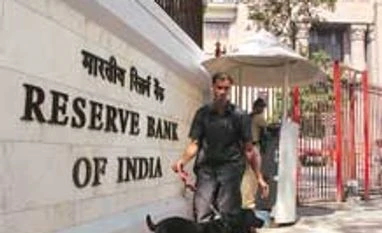 "Bankers cheer RBI policy, analysts see tightening ahead")


 Connect with us on WhatsApp