Bankers divided on extending moratorium, fear potential spike in bad loans

Without regulatory intervention, slippages could surge 300 bps

bank loans, moratorium, defaul, bad loans, repayment, lenders, banks
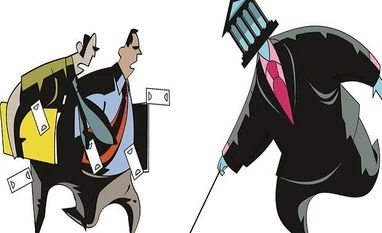
HDFC Bank, Federal Bank, and Bandhan Bank have all raised their contingency provisioning towards likely loan losses due to the pandemic, indicating that the amount set aside earlier could be insufficient | Illustration by Binay Sinha
Hamsini Karthik Mumbai
3 min read Last Updated : Jul 22 2020 | 6:10 AM IST

Don't want to miss the best from Business Standard?

The banking sector is divided on extending the moratorium on loan repayments yet again.

SBI Chairman Rajnish Kumar has dismissed the need for further relaxation on repayments, with initial estimates — pertaining to the impact on banks’ asset quality in FY21 — causing much worry. Krishnan Sitaraman, senior director (financial sector ratings and structured finance ratings) at CRISIL, however, has said that slippages could increase by 250-300 bps in FY21, without any relaxation.

On similar lines, Prakash Agarwal, director and head (financial institutions) at India Ratings, said slippages could rise to even 5.5 per cent, reiterating that banks could be bracing for a tough year in the absence of any regulatory intervention.

HDFC Bank, Federal Bank, and Bandhan Bank have all raised their contingency provisioning towards likely loan losses due to the pandemic, indicating that the amount set aside earlier could be insufficient.

Many of the top banks have either raised or are in the process of raising capital to hedge against a potential spike in bad loans. This indicates that the picture on asset quality is yet to be clear, and explains why banks aren’t too optimistic on the bad loan front from August, after the moratorium gets lifted. So where do Kumar’s concerns regarding an extended moratorium stem from, despite the perils of a pile-up in bad loans being clear? It could be due to possible challenges on the asset and liability management (ALM), as well as the implication of the moratorium on credit behaviour of customers.


Moratorium allows banks to book the interest earned during the period for which the relaxation has been granted. However, there isn’t any real cash flow coming into the bank. Given that the interest booked is notional, it could have an impact on ALM of lenders.

“An ALM mismatch is bound to happen, with banks having to pay interest despite no real inflow of cash,” Sitaraman warned.

Banks are yet to feel the pressure of an ALM mismatch. But this is largely because withdrawals haven’t been significant so far, given the magnitude of the lockdown, said Agrawal.

Cash in circulation is expected to rise significantly once economic activity picks up, given that withdrawals by depositors will also rise, compared to March. Sitaraman, though, has reasoned that the repayment capacity of borrowers will also rise along with the gradual revival in the economy, thereby negating the need for a blanket moratorium like the current one.

Fewer customers opting for the moratorium in the second phase has also been cited as a point against extension beyond August. However, Neeraj Vyas, MD and CEO of PNB Housing, said the assumption by some customers that they would be automatically eligible for an extended moratorium — because of which they did not move the bank with a fresh application — has resulted in the falling number.

Nonetheless, there is growing consensus among experts that while the two phases of moratorium have achieved their purpose, the efficacy of a third one is questionable.

“Whether it ends up being a deferment of a 2008-like problem, needs to be seen,” said Agarwal, given how the prolonged relaxation has been a moral hazard and could affect the repayment culture, going by past experience.

What is clear, though, is that banks have a mountain to climb when it comes to balance sheet preservation.

One subscription. Two world-class reads.

Already subscribed? Log in

Subscribe to read the full story →
*Subscribe to Business Standard digital and get complimentary access to The New York Times

Smart Quarterly

₹900

3 Months

₹300/Month

SAVE 25%

Smart Essential

₹2,700

1 Year

₹225/Month

SAVE 46%
*Complimentary New York Times access for the 2nd year will be given after 12 months

Super Saver

₹3,900

2 Years

₹162/Month

Subscribe

Renews automatically, cancel anytime

Here’s what’s included in our digital subscription plans

Exclusive premium stories online

  • Over 30 premium stories daily, handpicked by our editors

Complimentary Access to The New York Times

  • News, Games, Cooking, Audio, Wirecutter & The Athletic

Business Standard Epaper

  • Digital replica of our daily newspaper — with options to read, save, and share

Curated Newsletters

  • Insights on markets, finance, politics, tech, and more delivered to your inbox

Market Analysis & Investment Insights

  • In-depth market analysis & insights with access to The Smart Investor

Archives

  • Repository of articles and publications dating back to 1997

Ad-free Reading

  • Uninterrupted reading experience with no advertisements

Seamless Access Across All Devices

  • Access Business Standard across devices — mobile, tablet, or PC, via web or app

Topics :CoronavirusNirmala SitharamanLockdownBad loansIndian BanksLoan repaymentBank loansloan defaultNon-performing assetsIndian EconomyRajnish KumarsbiPunjab National BankCrisilIndia Ratings

Next Story




