Banks can no longer complain that policy transmission is getting hampered due to liquidity tightness. The Reserve Bank of India (RBI) has honoured its promise of keeping the banking sector liquidity in a “neutral” zone, or no-deficit, no-surplus mode and this should now force banks to cut rates.
In March, the banking sector liquidity deficit touched the ~2-lakh-crore mark, as the government kept its cash balances with the central bank instead of spending it in the market. In its April policy, RBI said it would now inject durable liquidity in the system whenever needed and would bring the liquidity deficit to a neutral zone.
On July 1, the banking system liquidity was surplus of ~4,656 crore, including marginal standing facility (MSF), which the banks access in case of emergencies. Excluding the MSF, the banking system liquidity was in deficit of only ~44 crore.
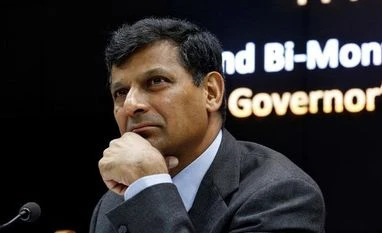
In a media interaction after the April policy, RBI Governor Raghuram Rajan made his priorities clear: “We have now given them (banks) more liquidity, so transmission should take place,” he said, adding “there will be no uncertainty about liquidity now.”
Since then, the central bank has injected ~80,000 crore of long-term liquidity through secondary market bond purchases through its open market operations (OMO). The government’s surplus cash balances with RBI has now come down to zero even as there has been reduction in cash in circulation, noted India Ratings and Research.
“The impact is already evident in overnight money market rates as well as T-bill rates, which have softened 20-40 bps (basis points) since the start of FY17,” the rating agency said in a note, adding there was still scope for OMO purchases.
“Additionally, foreign currency non-resident (B) deposit redemption and an increase in currency-in-circulation from end-1QFY17 (first quarter of FY17) will be a major determinant for the next round of OMO purchases,” it said.
According to analysts, the improved liquidity will also aid at the time of maturity of foreign currency non-resident (bank) or FCNR (B) deposits, when banking system liquidity is expected to get strained.
RBI is now expected to maintain this liquidity stance and conduct OMOs to maintain the neutral stance, analysts say.

 "Banking liquidity reaches neutral zone")


 Connect with us on WhatsApp