RBI to review MCLR Regime
Bankers admit cost of funds has come down by 50-60 bps but transmission hasn't been more than 20-30 bps
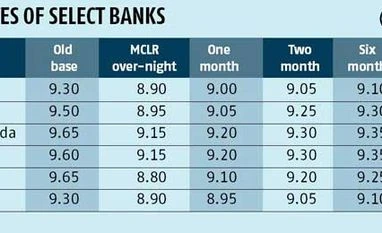
Nupur Anand Mumbai Two months after the start of the marginal cost of funds-based lending rate (MCLR), the new benchmark to which the pricing of loans is linked, the Reserve Bank of India (RBI) is looking at reviewing this regime.
“We will shortly review the operations of MCLR framework to iron out any issues… It is early days yet, it has been in place only for a month. We have to see how it transmits into lending rates. There is an MCLR and banks have to add a spread to it and we have to see how that moves. So, I think it is going to take a little while before we can assess fully whether it has the effect intended,” RBI Governor Raghuram Rajan said.
This comes at a time when bankers admit that while the cost of funds under the new rate regime has come down by almost 50-60 basis points (bps) as compared to the earlier base rates, the transmission to end-consumers hasn’t been more than 20-30 bps.
Marie Diron, senior vice-president, Sovereign Risk Group, Moody’s said the transmission of the monetary policy will depend on progress in the clean-up of bank balance sheets.
This is because lenders can add a spread component over and above the MCLR, depending on the customer’s risk profile and other considerations. After adding this spread, the real effect of transmission gets limited.
In turn, this end ups undermining the whole idea behind MCLR, which was aimed at a faster and better transmission.
Since 2015, the regulator has reduced the key lending rate by 125 bps (till December when the MCLR guidelines were introduced) but banks had brought down their base rates by only 50-60 bps at that time. As a result, RBI introduced the MCLR regime, which came into effect on April 1. It was based on marginal cost of funds instead of the average cost of funds to ensure that the rate cuts were passed on quickly.
“Another factor, apart from the spread component, that has led to a slower transmission is the lack of credit demand that continues to hover in single digits.
In general, I think there is a paucity to credit demand from the usual sources which is why banks are not in a great hurry to reduce rates either. They seem to be suggesting that they will not be attractive (to) a whole lot of new credit if they reduce rates, so why not stay with the existing borrowers and so on,” Rajan said.
As the difference between the credit and the deposit growth widens further, with deposit growth outpacing the former, banks will probably become more inclined to deploying the funds into lending instead of just parking these in government securities. However, instead of waiting to see how the new lending rate regime takes shape, the regulator will soon be taking stock of the situation and if needed may bring about changes.

 "RBI to review MCLR Regime")


 Connect with us on WhatsApp