Home / Finance / News / Banks should clean balance sheets by FY17, says regulator
Banks should clean balance sheets by FY17, says regulator
Raghuram Rajan said stressed assets would have to be cleaned on the balance sheet by not only provisioning but also by putting some of these assets back on track
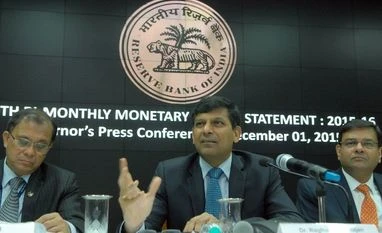
RBI Governor Raghuram Rajan along with Deputy Governors, H R Khan (L) and Urjit Patel (R) during a press conference announcing the RBI monetary policy at RBI Headquarters in Mumbai (photo: Kamlesh Pednekar)
With many initiatives in place to tackle stressed assets, Reserve Bank of India governor Raghuram Rajan expects banks to finish the task of cleaning their balance sheets by March 2017.
Bankers termed as reasonable the governor’s goal. While the system continues to show signs of stress, the effect of the efforts in recent years to monitor credit, early recognition and early resolution of stressed assets would begin to show results. Also recovery in the economy would “lift some boats’ (meaning, some stressed units would begin to perform and resume payments). However, banks will still have to battle with the tardy pace of stress resolution in legal forums.
The governor, in a post policy media interaction, said stressed assets would have to be cleaned on the balance sheet by not only provisioning but also by putting some of these assets back on track.
“The challenge of stressed assets is both for public sector and private sector banks. More of the problem is in public sector banks because they went more into infrastructure investments, where many of the difficulties are. I want to put something like March 2017 on the table as when we hope that a full clean-up will have been done.”
A senior executive with a State Bank of India associate entity said stressed loans would partly stay as business risk. The issue is how much. The economy was turning around and the pace of slippage had moderated. As the loan book begins to grow, the share of bad loans would begin to decline in an expanding balance sheet, he added.
Rating agency ICRA, in its review of the second quarter results of banks, said the pace of stressed asset formation moderated from around 5.6 per cent in FY15 to 3.3 per cent in the first half of FY16. As a result, the consistent increase witnessed in the stock of stressed advances over recent years was arrested. The level of stressed advances remained largely unchanged at 10.7 per cent as of September, versus 10.6 per cent as of March, according to ICRA.

 "Banks should clean balance sheets by FY17, says regulator")


 Connect with us on WhatsApp