Banks must flag bad loans as NPAs after 90-day default: RBI to NCLAT

Sixty-nine firms of the group have been classified under categories based on their ability to service routine debt obligations
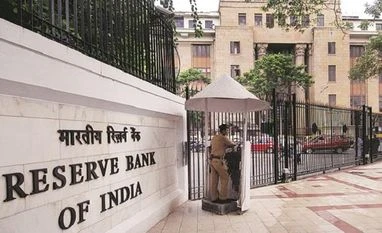
reserve bank of india
Aashish Aryan New Delhi
3 min read Last Updated : Apr 16 2019 | 10:38 PM IST
The Reserve Bank of India (RBI) on Tuesday told the National Company Law Appellate Tribunal (NCLAT) that banks had an obligation to mark bad loans as non-performing asset (NPA) after the default of 90 days and that the lenders could not be relieved of the same.

The banking sector regulator has moved the NCLAT seeking a modification of its February 25 order in which the appellate tribunal had said that accounts of the Infrastructure Leasing & Financial Services (IL&FS) and its subsidiaries could not be classified NPAs without approval.

Reflecting such loans as NPA is important on the books of banks as it acts as an early warning signal, senior advocate Gopal Jain appearing for the RBI said.

“You have to know the real state of the accounts of the banks. Otherwise, if you do not show NPA, you would constantly be booking interest on the loan’s principal amount. It would be a very rosy picture. The whole thing is to have a transparent and fair accounting system, so that the health of the institution is not affected,” Jain said.

The banking sector regulator said it was not on the question of the resolution process of the IL&FS and just wanted a modification on the order, which would allow banks to record NPAs on their books in terms of the master circular, which was also upheld by the Supreme Court.

A two-judge Bench of the NCLAT led by Chairperson Justice S J Mukhopadhaya said that the appellate tribunal was not on the question of whether the RBI and the banks had those powers in terms of the circular, but would only decide if the accounts could be declared NPA.

“Nobody can challenge your circular as bad. We cannot say anything about your circular. We will be deliberating whether it can be declared NPA. The moment it is declared NPA, none of the (IL&FS) companies will go for resolution,” the two-judge Bench observed. The case would be next heard on April 29.

The outstanding loan of the IL&FS group is about Rs 60,000 crore, while debt is over Rs 91,000 crore. Hearing a plea moved by lenders, the Bench observed that the step was being taken in the interests of the resolution plan being carried out by the new board of the IL&FS.

On February 11, the central government and the new board of the IL&FS had submitted an affidavit detailing three categories — green, amber, and red.

Sixty-nine firms of the group have been classified under these categories based on their ability to service routine debt obligations. Companies with no cash and not in a position to pay any creditor were classified red. Those with enough to pay secured creditors, but not unsecured ones, amber. Moreover, the NCLAT has so far allowed green firms to service debt obligations.

One subscription. Two world-class reads.

Already subscribed? Log in

Subscribe to read the full story →
*Subscribe to Business Standard digital and get complimentary access to The New York Times

Smart Quarterly

₹900

3 Months

₹300/Month

SAVE 25%

Smart Essential

₹2,700

1 Year

₹225/Month

SAVE 46%
*Complimentary New York Times access for the 2nd year will be given after 12 months

Super Saver

₹3,900

2 Years

₹162/Month

Subscribe

Renews automatically, cancel anytime

Here’s what’s included in our digital subscription plans

Exclusive premium stories online

  • Over 30 premium stories daily, handpicked by our editors

Complimentary Access to The New York Times

  • News, Games, Cooking, Audio, Wirecutter & The Athletic

Business Standard Epaper

  • Digital replica of our daily newspaper — with options to read, save, and share

Curated Newsletters

  • Insights on markets, finance, politics, tech, and more delivered to your inbox

Market Analysis & Investment Insights

  • In-depth market analysis & insights with access to The Smart Investor

Archives

  • Repository of articles and publications dating back to 1997

Ad-free Reading

  • Uninterrupted reading experience with no advertisements

Seamless Access Across All Devices

  • Access Business Standard across devices — mobile, tablet, or PC, via web or app

Next Story


