Covid-19 impact: Moody's lowers SBI's baseline credit assessment to 'ba2'

The rating agency, however, affirmed SBI's Baa3 deposit ratings
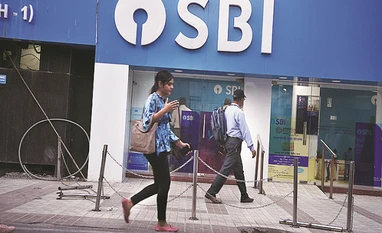
SBI
Moody's has maintained SBI's rating outlook, where applicable, as negative, in line with the outlook on India's sovereign rating
Abhijit Lele Mumbai
2 min read Last Updated : Aug 25 2020 | 10:52 PM IST
Rating agency Moody’s has downgraded State Bank of India’s (SBI’s) baseline credit assessment (BCA) from “ba1” to “ba2” as economic shock from the Covid-19 pandemic may aggravate the weakening borrowers’ credit profiles. It would hurt asset quality of India banks. The agency affirmed SBI’s Baa3 deposit ratings.

The downgrading reflects that bank’s asset quality and profitability will deteriorate. The resultant weakening in internal capital generation will reverse improvements in its financial metrics achieved over the past two years.

SBI’s bad loan ratio was potentially understated as it does not capture loans on which the bank has granted payment deferrals. 

Also, its common equity ratio for risk weighted assets is low when compared to similarly rated global peers. It has maintained SBI’s rating outlook, where applicable, as negative, in line with the outlook on India’s sovereign rating.

This action concludes the review initiated on SBI’s BCA, adjusted BCA, junior securities on June 2. Prior to the review for downgrade, Moody’s had expected that improvements to SBI’s asset quality and profitability would result in financial metrics in line with global peers with ba1 BCAs.


SBI's asset quality improved in the quarter ended June 2020, with its gross non-performing loan ratio declining to 5.4 per cent from 7.5 per cent a year ago. However, the ratio is potentially understated because it does not include loans on which the bank has granted payment deferrals. 

As of June 2020, about 9.5 per cent of SBI's loans were under a repayment moratorium until the end of August 2020. After the loan deferment period ends, the RBI has permitted Indian banks to restructure loans to borrowers whose earnings and businesses have been impacted by the pandemic. 

In line with the trend for other Indian peers, SBI is also expected to restructure loans. However, uncertainty around the length and depth of India's economic slowdown make it difficult to estimate what portion of restructured loans will eventually turn into NPL’s.

SBI's capitalization —as measured by tangible common equity (TCE) relative to adjusted risk-weighted assets of 8.5% as of March 2020 —low when compared to similarly rated global peers.

One subscription. Two world-class reads.

Already subscribed? Log in

Subscribe to read the full story →
*Subscribe to Business Standard digital and get complimentary access to The New York Times

Smart Quarterly

₹900

3 Months

₹300/Month

SAVE 25%

Smart Essential

₹2,700

1 Year

₹225/Month

SAVE 46%
*Complimentary New York Times access for the 2nd year will be given after 12 months

Super Saver

₹3,900

2 Years

₹162/Month

Subscribe

Renews automatically, cancel anytime

Here’s what’s included in our digital subscription plans

Exclusive premium stories online

  • Over 30 premium stories daily, handpicked by our editors

Complimentary Access to The New York Times

  • News, Games, Cooking, Audio, Wirecutter & The Athletic

Business Standard Epaper

  • Digital replica of our daily newspaper — with options to read, save, and share

Curated Newsletters

  • Insights on markets, finance, politics, tech, and more delivered to your inbox

Market Analysis & Investment Insights

  • In-depth market analysis & insights with access to The Smart Investor

Archives

  • Repository of articles and publications dating back to 1997

Ad-free Reading

  • Uninterrupted reading experience with no advertisements

Seamless Access Across All Devices

  • Access Business Standard across devices — mobile, tablet, or PC, via web or app

Topics :CoronavirusMoody'ssbiIndian Bankscredit health rating

Next Story



