Moody's terms easing of housing finance norms by RBI as 'credit negative'

The lower capital requirements will weaken banks' protection from the housing sector
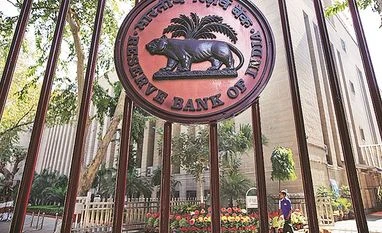
RBI, reserve bank of India
Abhijit Lele Mumbai
Last Updated : Jun 15 2017 | 1:57 PM IST
Rating agency Moody’s on Thursday said that the Reserve Bank of India’s move to relax regulatory norms for housing finance may increase the risks for banks. It is credit negative.
 
On June 7, RBI lowered the risk weights and standard asset provisioning on housing loans in select loan-size categories.
The lower capital requirements will weaken banks’ protection from the housing sector, which has grown rapidly in recent years, and will encourage greater lending.
 
Moody’s warned that this growth is occurring as non-bank finance companies increasingly target the home-loan segment, posing greater downside risk if there is a correction in property prices. 
 
The RBI’s notification affects the risk weights of newly originated housing loans in two main categories. For housing loans more than Rs 75 lakh, the risk weights will fall to 50 per cent from 75 per cent. And for housing loans between Rs 30-75 lakh, the risk weights will decline to 35 per cent from 50 per cent.
 
At the same time, the RBI has removed the previous distinction of risk weights based on loan-to-value ratios for loans in the same category.
 
RBI also has lowered the standard asset provisioning requirement to 25 basis points from 40. There is no change to the risk weights for housing loans up to Rs 30 lakh.
 
Moody’s said over the next 12-18 months, overall system credit growth will remain muted given banks’ weak balance sheets amid continued asset quality deterioration. At the end of March 2017, annual bank credit growth was 7.6 per cent, down from 10.2 per cent the previous year.
 
Although lower risk weights would boost sluggish credit growth while limiting the effect on banks’ capital position, the competition for housing loans has significantly increased among banks and non-bank finance companies. Since 2015, housing loan book has grown at substantially higher rate than pace of overall bank credit growth.
 
In year ended March 2015, Housing finance portfolio grew by 16.7 per cent while overall loan growth was 7.8 per cent. And during the period of FY16 and Fy17, housing finance portfolio rose by 18.8 per cent and 15.2, while over-all bank credit expanded by 10.2 per cent and 7.6 per cent respectively, Moody’s added.

One subscription. Two world-class reads.

Already subscribed? Log in

Subscribe to read the full story →
*Subscribe to Business Standard digital and get complimentary access to The New York Times

Smart Quarterly

₹900

3 Months

₹300/Month

SAVE 25%

Smart Essential

₹2,700

1 Year

₹225/Month

SAVE 46%
*Complimentary New York Times access for the 2nd year will be given after 12 months

Super Saver

₹3,900

2 Years

₹162/Month

Subscribe

Renews automatically, cancel anytime

Here’s what’s included in our digital subscription plans

Exclusive premium stories online

  • Over 30 premium stories daily, handpicked by our editors

Complimentary Access to The New York Times

  • News, Games, Cooking, Audio, Wirecutter & The Athletic

Business Standard Epaper

  • Digital replica of our daily newspaper — with options to read, save, and share

Curated Newsletters

  • Insights on markets, finance, politics, tech, and more delivered to your inbox

Market Analysis & Investment Insights

  • In-depth market analysis & insights with access to The Smart Investor

Archives

  • Repository of articles and publications dating back to 1997

Ad-free Reading

  • Uninterrupted reading experience with no advertisements

Seamless Access Across All Devices

  • Access Business Standard across devices — mobile, tablet, or PC, via web or app

Next Story



