Seeking to allay fears arising from dud loans pile-up, veteran banker K V Kamath said interest rate cuts will give troubled lenders Rs 2.5 trillion boost through treasury gains that will help the system tide over troubles and also ease pressure on growth capital.
"At this point I have no fear at all (about non-performing assets)," Kamath, president of the BRICS grouping-promoted New Development Bank, told PTI on the sidelines of the eighth BRICS Summit here.
"The interest rate correction gives one big comfort. The treasury gains on mark-to-market for banks so far is Rs 1 trillion. We expect another 1 percentage point fall, that should lead to another Rs 1.5 trillion of gains. That is a good Rs 2.5 trillion gains coming to the banks," said Kamath, who is credited for making ICICI Bank the largest private sector lender in the country.
With some quarters flagging depleting capital levels as a key concern for lenders, Kamath said the treasury gains will also ensure that the worst of the fears do not come true.
"Capital is coming in because of the treasury gains," he said.
A one-time asset quality review undertaken by the Reserve Bank last year to have a true picture of bank balancesheets led to manifold spike in their non-performing assets, which required provisioning and historically high losses being reported by lenders. This, in turn, put pressures on the capital buffers of the banks.
This has resulted in banks shying away from lending to corporates in general and to large over-leveraged groups in particular, who collectively owe close to Rs 9 trillion in dud loans to the system.
As a result, credit to the industrial sector has come to naught. In August, it hit the negative territory with a degrowth of around 0.3 per cent.
The dent in investor confidence due to the loan losses, coupled with market volatilities, has made the avenue of raising capital difficult. Moreover, coming at a time when the system is migrating to the capital-intensive Basel-III framework, it has led to more concerns on capital adequacy.
International rating agency Fitch had pegged the capital requirement of lenders at $90 billion till 2019, when the Basel-III framework will have to be fully adopted.
According to the Reserve Bank, the gross NPAs of the banks had stood at 8.7 per cent at the end of the June quarter. In the Financial Stability Report, the RBI had said it expects the ratios to deteriorate further under a baseline scenario.
However, the fight on the NPA front has come simultaneously with a cool-down in inflation, which has led to the Reserve Bank cutting rates by 1.75 per cent since January 2015. This, coupled with expectations of the rates going down further, has resulted in treasury gains for banks as the yields go down.
Kamath lauded the work done by banks on the NPA front, saying the problematic assets have been identified and resolution of the cases is the most important aspect now.
"Identification is over, capital is there, otherwise it would be difficult," he said.
On the progress at NDB, Kamath said the Shanghai- headquartered lender's book stands at $900 million (including
$250 million in India) and it expects to close 2016 with a book of around $1 billion.
For 2017, the bank expects to more than double its book to $2.5 billion.
On the liability side, he said the bank will be focusing on local currency borrowings in the currencies in which it lends to reduce volatility risks, which will also curb its hedging costs.
It is planning a masala bonds issue - where it will raise rupee-denominated debt from international investors - to support Indian lending operations, he said, adding the issue shall take place in the first quarter of 2017.
The NDB will have to get itself rated from international agencies before it embarks on such endeavours, Kamath said, but sounded deeply sceptical about the way in which they work.
He specifically pointed to their tendency to overlook capital buffers and give ratings according to the promoter countries' sovereign ratings as an impediment to a better rating. He also highlighted the issue of leverage, where multilateral agencies are not allowed to stretch their books to beyond three times their capital base.

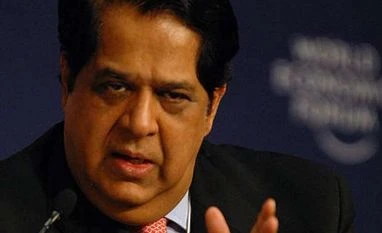 "NPA not an issue, rate cuts to fetch Rs 2.5 trillion gains: K V Kamath")


 Connect with us on WhatsApp