World view of India is more positive than Indians': RBL Bank CEO

Vishwavir Ahuja, MD & CEO of RBL Bank, says the problem of non-performing assets (NPAs) in public banks is so huge that the insolvency process alone will not work.
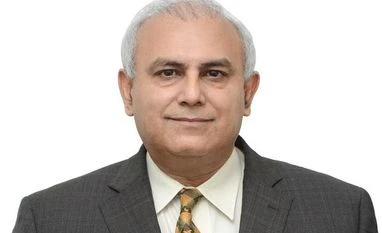
Vishwavir Ahuja,  MD & CEO of RBL Bank
Vishwavir Ahuja, MD & CEO of RBL Bank
Indivjal Dhasmana New Delhi
Last Updated : Nov 07 2017 | 9:00 PM IST
Vishwavir Ahuja, MD & CEO of RBL Bank, tells Indivjal Dhasmana that resurgent public sector banks after recapitsation from the government will give more competition to larger private sector banks. Edited excerpts:

Will the resurgent PSU banks after recapitalisation threaten your bank?
Well-capitalized banking and financial systems are necessary for stable economic growth. There is no doubt that this is a decisive move by the government that will positively affect the banking system as a whole. This recapitalization will help PSU Banks in their provisioning requirements and provide them with growth capital for the future. To answer your question about whether they will pose competition to us if you see, even while they were facing a difficult situation, PSU Banks were losing market share to the bigger private players. So logic dictates that when we see a resurgence of PSU Banks post-recapitalization it will be the bigger players that face the challenge. RBL Bank has identified key opportunities across several planks of business. We are committed to our vision and do not see any significant impact on our own growth momentum.

In new World Bank ease of business ranking, India gained 30 places to come at 100. Has the ground situation for doing business improved or is the ranking only an optical development?
There is a noticeable change in the current economic environment. Government’s push on structural reforms, move towards creating a digital economy and providing a transparent ecosystem for start-ups and entrepreneurs has resulted in a positive shift in the rankings. The new rankings do not account for the implementation of GST. A smooth implementation of GST can further propel India’s ranking.

You attended IMF-World Bank annual meetings in Washington. What were the views of the business community there about India’s economy after the announcement of demonetization and the roll out of the goods and services tax ?
I think that the worldview of India is far more positive than our own views of India. They look at us and see we are going through massive transformations in terms of large initiatives taken by India. The worldview is that these are very positive for India for the long term. The very fact that the country is going through pains is a temporary blip as the new system is being put into place and there are adjustments. The worldview is that this is temporary. This I heard from one and all. Having said that, if the challenges that we are facing persist longer, obviously fundamental sentiments get affected and the worldview may also get affected. At the moment, the world has given us very high marks. 

Net profit in the first half grew by 38 per cent, is it a factor of low base or you are gaining new grounds?
In the last five years, we have consistently grown at a CAGR of 48.49%. However, with that being said, we have outlined in our ‘Vision 2020’ guidance that we will continue to grow at 30-35% CAGR across our business engines. To reach our target, we will continue to leverage state-of-the-art technology to acquire, engage and service clients, increase our presence in mass banking, enhance our distribution through a combination of owned branches, BCs and customer service points (CSPs), create transaction and payment platforms that leverage changes in ecosystem driven by Aadhaar, UPI, IndiaStack, GST etc. among many others.

Are there plans to further raise money?
We did an IPO last year. We raised more money this year. We are okay for now. We raised money for only growth. We are consuming almost 40-50 basis points of capital every quarter, based on the pace of our growth. Just to fund our growth, capital consumption is almost 175 to 200 basis points every year. Which means I will need the next dose of capital in two or a half years based on the current rate of growth. 

One subscription. Two world-class reads.

Already subscribed? Log in

Subscribe to read the full story →
*Subscribe to Business Standard digital and get complimentary access to The New York Times

Smart Quarterly

₹900

3 Months

₹300/Month

SAVE 25%

Smart Essential

₹2,700

1 Year

₹225/Month

SAVE 46%
*Complimentary New York Times access for the 2nd year will be given after 12 months

Super Saver

₹3,900

2 Years

₹162/Month

Subscribe

Renews automatically, cancel anytime

Here’s what’s included in our digital subscription plans

Exclusive premium stories online

  • Over 30 premium stories daily, handpicked by our editors

Complimentary Access to The New York Times

  • News, Games, Cooking, Audio, Wirecutter & The Athletic

Business Standard Epaper

  • Digital replica of our daily newspaper — with options to read, save, and share

Curated Newsletters

  • Insights on markets, finance, politics, tech, and more delivered to your inbox

Market Analysis & Investment Insights

  • In-depth market analysis & insights with access to The Smart Investor

Archives

  • Repository of articles and publications dating back to 1997

Ad-free Reading

  • Uninterrupted reading experience with no advertisements

Seamless Access Across All Devices

  • Access Business Standard across devices — mobile, tablet, or PC, via web or app

Next Story



