Policy focusing on macroeconomic stability: S S Mundra
The policy has proposed several other measures to promote financial stability and credit discipline in the banking industry
Business Standard The Reserve Bank of India's (RBI) 'action' as well as 'guidance' in today's policy primarily reflects its growing worry about the balance of payments position and its implications for macroeconomic stability and growth. By modestly reducing the key policy rates despite an accentuated growth slowdown, it has shown the available space for monetary easing is very limited on account of historically-high level of current account deficit (CAD) and the pattern of its financing.
RBI's guidance on economic growth is also cautious at 5.7 per cent, year-on-year (y-o-y), in 2013-14 (FY14) with the pipeline of new investments drying up and existing projects stalled by bottlenecks and implementation gaps. However, RBI is confident that with expected normal monsoon and benign trends in global commodity prices, the headline inflation will be contained around 5.5 per cent (y-o-y) in FY14. It has appropriately pegged the M3 (broad money supply), deposit and non-food credit growth at 13 per cent, 14 per cent and 15 per cent, respectively, for FY14 consistent with its growth projection and tolerance level for inflation. The policy has proposed several other measures to promote financial stability and credit discipline in the banking industry.
Banks will now be required to reduce their holdings of government bonds in the held-to-maturity books to 23 per cent of bonds from the current 25 per cent. As this will be implemented gradually, banks will be able to absorb it without much strain. Also, banks will have to assume higher risk weight/provisions on their exposure to unhedged foreign currency positions of corporates. This will prompt banks to price such exposures in the credit risk premium. In an effort to curb gold imports, RBI said it would tighten gold imports on consignment basis by banks and decided to restrict loans against specially-minted gold coins to 50 grams per customer.
RBI proposes to make a distinction between pure commercial real estate (CRE) projects and CRE-residential housing projects from the perspective of risk weights and provisioning. The banking regulator has urged banks to introduce long-term fixed-interest-rate loan products to customers to protect them from interest rate risks given the current volatile environment.
To step up the efforts towards financial inclusion, RBI has advised domestic banks to front-load opening of branches in unbanked rural areas to ensure smooth rollout of the government's direct benefit transfer scheme.
S S Mundra
Chairman & Managing Director, Bank of Baroda

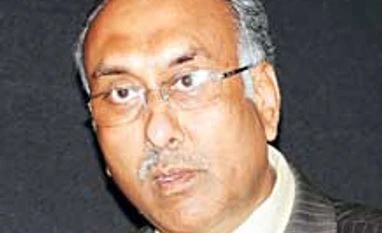 "Policy focusing on macroeconomic stability: S S Mundra")


 Connect with us on WhatsApp