Rajan gets his way on RBI's restructuring plan
RBI conducts interviews for first lateral hire for CGM post; deputy governors to head four distinct verticals
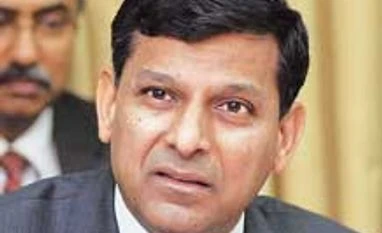
Manojit Saha Mumbai When Raghuram Rajan leaves for the picturesque hill town of Mussoorie at the end of this month to attend the annual Reserve Bank of India retreat, he would be fairly content with the progress made in revamping the central bank's organisational structure - a plan he initiated during last year's retreat at Udaipur.
The central bank set a precedent on Tuesday when it interviewed 12 candidates for lateral recruitment of a Grade F officer, that is, chief general manager (CGM) in its economic policy and research department. It's not that lateral recruitment hasn't happened earlier, but they were only on contract basis, or for a particular project. In any case, no such recruitment had ever happened for a Grade F position, which is the highest promotional grade in RBI. This is the first time in its 79-year history that a candidate who has been laterally recruited will have the opportunity to get promotion within the central bank.
This isn't an isolated example. Despite internal opposition, Rajan has managed to bring in sweeping changes in the organisation, which central bank observers say, is a confirmation of his growing clout in the government.
Following the Udaipur retreat, the RBI had set up three committees. The first one was on organisational restructuring headed by Executive Directors B Mahapatra (who retired earlier this year) and Deepak Mohanty and the second one looked at the review of training facilities and skill development. It was headed by Executive Director P Vijaya Bhaskar. The third committee was on human resources headed by R Gandhi, who was later promoted as deputy governor.
The restructuring plan proposed organising RBI central office departments into five clusters - regulation and banking services, supervision and risk management, monetary stability, financial markets and infrastructure, and operations and human resources.
The segregation of banking supervision and regulation, which is a part of the recast process, is almost complete. There are separate executive directors for regulation and supervision.
The process was extended to deputy governors on Tuesday. While H R Khan will look after financial markets and infrastructure, Urjit R Patel has been given the charge of monetary policy and research. R Gandhi will look after regulation and risk management and S S Mundra has been assigned the responsibility of supervision and inclusion
The proposal to have two additional executive directors - one each from general cadre and research cadre - has also been completed with the elevation of M D Patra as ED, who is from the research cadre. Earlier, out of nine executive directors (EDs), only one was from the research cadre. Now, among 11 EDs, two are from the research cadre.
K K Vohra and G Mahalingam have also been appointed as new EDs. One ED post fell vacant after Mahapatra retired.
The HR and organisational recast plan was frowned upon by the employees association as well as the government. The government nominee on the RBI board had asked the central bank's top management to discuss the issues internally before implementing it.
The governor and the deputy governors had meet the United Forum of Reserve Bank Officers and Employees in August. The association, however, was of the view that lateral recruitment, at higher grade, could only be done for a limited period and for a very limited number of experts, on contractual basis. The forum also opposed creation of new EDs and had suggested upgradation of officer-in-charge of metro centres to EDs.
However, there is one unfinished task that could still bother the governor: The appointment of a chief operating officer with deputy governor's rank. This proposal has already been turned down by the government nominees on the RBI board on the ground that the RBI Act needs to be amended to create an additional deputy governor's post. The additional DG is expected to look after the fifth vertical, that is, administration.

 "Rajan gets his way on RBI's restructuring plan")


 Connect with us on WhatsApp