India's first cut in borrowing costs since May 2013 could be only months away as a slide in oil prices cools inflation, interest-rate swaps show.
The fixed payment to lock-in rates for a year using the derivatives fell 37 basis points this month, the most since September 2013, to 8.10 per cent, data compiled by Bloomberg show. That's the biggest decline in Asia. Reserve Bank of India (RBI) Governor Raghuram Rajan has held the repurchase rate at eight per cent since an increase in January.
The scope for Rajan to use monetary policy to spur India's economic recovery has increased after a 23 per cent slide in Brent crude oil prices since June helped cut the pace of consumer-price gains to a three-year low. Ashima Goyal, an adviser to RBI, said last week the central bank could consider cutting rates as early as March, should lower energy costs help ease inflation further in a nation that imports almost 80 per cent of oil.
"The drop in international oil prices has come as a boon for India," Sujoy Kumar Das, head of fixed income at Religare Invesco Asset Management Co in Mumbai, said in a telephone interview on October 21. "Swaps are reflecting expectations that the retreat in crude will help curb inflation further and allow the central bank room to act on interest rates." Standard & Poor's upgraded its outlook for India's credit rating last month, citing reduced price pressures and a government plan to narrow the budget deficit to a seven-year low of 4.1 per cent of gross domestic product. Finance Minister Arun Jaitley said in an interview with The Times of India newspaper last week that it's time to start cutting interest rates as, inflation is stabilising.
'Support Growth' Slowing consumer price index (CPI) gains to four per cent looks achievable, Goyal said in an October 20 interview, without specifying a time frame. Cheaper crude would also help the government cut subsidies and the budget shortfall, she said. India's 10-year rupee-denominated sovereign bonds now pay an inflation-adjusted yield of 187 basis points, or 1.87 percentage points, the most at least since the start of 2012.
"Various factors are coming together to enable RBI to support the growth process by lowering interest rates," said Goyal. "Real rates are becoming more and more positive, which would be severely disinflationary, and that means we have to cut rates." India's $1.9-trillion economy will grow 5.5 per cent in the financial year through March 2015, the central bank predicts. While that would exceed the previous period's 4.7 per cent, it's still slower than the average 8.7 per cent pace achieved during the 2006-2010 period. Industrial production grew 0.4 per cent in August, holding near the slowest pace since March.
Bond Rally Government bonds in India rallied in October, pushing the 10-year yield to a 13-month low of 8.32 per cent on Tuesday. The rate dropped 50 basis points in 2014, while the rupee advanced 0.8 per cent to 61.31 per dollar in Asia's best performance.
"With the sharp decline in crude helping change India's inflation dynamics, the bond markets are now clearly building a case for a rate cut around March or April," Vijay Sharma, executive vice-president for fixed income at PNB Gilts Ltd in New Delhi, said in a phone interview on Tuesday. "Earlier, nobody was talking about a move before June." The drop in yields partly reflects policy makers' success in controlling inflation, Rajan said on October 16.
The swap market is signaling a repo-rate cut as early as February and is probably pricing in at least 75 basis points of reductions in the next 12 months, Kumar Rachapudi, a Singapore- based rates strategist at Australia & New Zealand Banking Group Ltd, wrote in a research note on October 27.
'Remain Vigilant' Not everyone expects RBI to ease policy in the coming quarters. Standard Chartered Plc sees the central bank holding rates through next year to ensure its six per cent inflation target for January 2016 will be met, and to shield the economy against the impact of potential US rate increases.
"To achieve the six per cent target, supply-side measures are needed to ensure lower inflation is resilient to minor shocks, and to absorb increased price pressures as economic activity picks up," Anubhuti Sahay, an economist at Standard Chartered in Mumbai, said in a phone interview on Tuesday.
"The RBI is likely to remain vigilant on the developments in global markets, particularly the timing and magnitude of US policy rate hikes." The UK bank forecasts the 10-year yield in India will rise to 8.60 per cent next quarter and expects the Federal Reserve to start increasing rates in the following period.
Falling Risk Bond risk in India fell this year. Credit-default swaps insuring the notes of State Bank of India, a proxy for the sovereign, against non-payment for five years declined 120 basis points to 160, according to data provider CMA.
In a Sept. 24 meeting, four of seven external members of the central bank's technical advisory committee on monetary policy recommended cutting borrowing costs to fight stagnating industrial demand, the RBI said in a statement Oct. 22.
"We expect Governor Rajan to sound more dovish in December and cut rates in February," Indranil Sen Gupta, a Mumbai-based economist at Bank of America Merrill Lynch, said in a phone interview on Oct. 28. "The RBI will wait till February as it will want some more time to make sure that inflation is truly coming off."

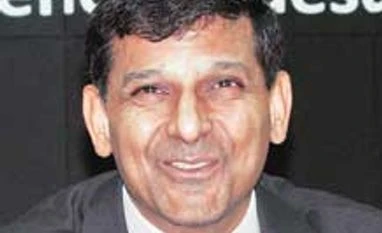 "Rajan rate-cut bets spur Asia's biggest swap drop")


 Connect with us on WhatsApp