RBI directs banks and non-banks to geotag payment touch points

Geo-tagging refers to capturing the geographical coordinates (latitude and longitude) of payment touch points deployed by merchants to receive payments from their customers
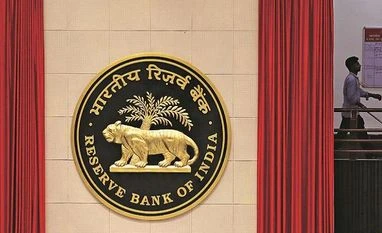
reserve bank of india, rbi
Reserve Bank of India
BS Reporter Mumbai
2 min read Last Updated : Mar 26 2022 | 1:00 AM IST
The Reserve Bank of India (RBI) has asked commercial banks as well as payment system operators (PSO) to geotag payment touch points like branches and automated teller machines while announcing a framework for Geo-tagging of Payment System Touch Points.

Geo-tagging refers to capturing the geographical coordinates (latitude and longitude) of payment touch points deployed by merchants to receive payments from their customers.

“Geo-tagging has various benefits, such as, provide insights on regional penetration of digital payments; monitor infrastructure density across different locations; identify scope for deploying additional payment touch points; facilitate focused digital literacy programmes,” RBI said in a notification.

RBI said that capturing the accurate location of existing payment system touch points / acceptance infrastructure is essential to upscaling and chalking out intervention strategies. “This requirement can be effectively facilitated by geo-tagging of payment touch points,” it said.

Digital payment transactions carried out by customers using payment touch points use two broad categories of i) physical infrastructure - Banking infrastructure comprising bank branches, offices, extension counters, Automated Teller Machines (ATMs) micro-ATMs used by Business Correspondents (BCs), and ii) payment acceptance infrastructure comprising Points of Sale (PoS) terminals, Quick Response (QR) codes deployed by banks / non-bank Payment System Operators (PSOs), etc.

“All banks / Non-bank PSOs shall report information on payment touch points to the Reserve Bank through the Centralised Information Management System (CIMS) of RBI,” the notification said.

The regulator further said banks / non-bank PSOs will be solely responsible for ensuring data pertaining to payment touch points deployed and the merchants acquired / on-boarded by them is up to date and accurate. The date from which the banks and PSOs need to report the information to RBI be advised later. 

One subscription. Two world-class reads.

Already subscribed? Log in

Subscribe to read the full story →
*Subscribe to Business Standard digital and get complimentary access to The New York Times

Smart Quarterly

₹900

3 Months

₹300/Month

SAVE 25%

Smart Essential

₹2,700

1 Year

₹225/Month

SAVE 46%
*Complimentary New York Times access for the 2nd year will be given after 12 months

Super Saver

₹3,900

2 Years

₹162/Month

Subscribe

Renews automatically, cancel anytime

Here’s what’s included in our digital subscription plans

Exclusive premium stories online

  • Over 30 premium stories daily, handpicked by our editors

Complimentary Access to The New York Times

  • News, Games, Cooking, Audio, Wirecutter & The Athletic

Business Standard Epaper

  • Digital replica of our daily newspaper — with options to read, save, and share

Curated Newsletters

  • Insights on markets, finance, politics, tech, and more delivered to your inbox

Market Analysis & Investment Insights

  • In-depth market analysis & insights with access to The Smart Investor

Archives

  • Repository of articles and publications dating back to 1997

Ad-free Reading

  • Uninterrupted reading experience with no advertisements

Seamless Access Across All Devices

  • Access Business Standard across devices — mobile, tablet, or PC, via web or app

Topics :GeotaggingRBIpayment systems

Next Story



