Economic recovery stronger than expected: RBI governor Shaktikanta Das

The RBI is scheduled to announce its monetary policy next week where it is expected to give its outlook on growth
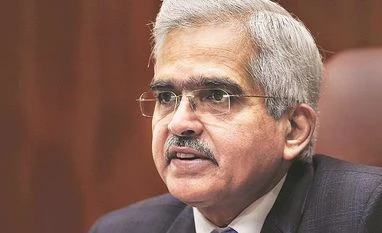
rbi governor, shaktikanta das
Reserve Bank of India Governor Shaktikanta Das
Anup Roy Mumbai
4 min read Last Updated : Nov 27 2020 | 12:09 AM IST
A day before the release of the second-quarter growth numbers, Reserve Bank of India (RBI) Governor Shaktikanta Das on Thursday said the economy had exhibited a stronger-than-expected pick-up in momentum of recovery, but warned that the recent surge in Covid-19 infections in advanced economies and parts of India continued to pose a potent risk to growth.

The RBI is scheduled to announce its monetary policy next week where it is expected to give its outlook on growth. Analysts don’t expect further rate cuts by the central bank, especially as the past cuts have not been fully transmitted yet, and the economic recovery makes such a move redundant for now.  

Speaking at the fourth annual meeting of the Foreign Exchange Dealers’ Association of India (FEDAI), Das said, “After witnessing a sharp contraction in GDP (gross domestic product) by 23.9 per cent in the first quarter and a multi-speed normalisation of activity in Q2, the Indian economy has exhibited a stronger-than-expected pick-up in momentum of recovery.” 

This, coupled with the rebound in global economic activities in the third quarter, had prompted the International Monetary Fund (IMF) to revise its assessment for global growth in 2020 “to a less severe contraction than what was assessed in June 2020”, he added. 

However, Das said it was important to maintain demand in the economy. “We need to be watchful about the sustainability of demand after festivals and a possible reassessment of market expectations surrounding the vaccine,” the governor said, adding the monetary policy guidance in October emphasised the need to see through temporary inflation pressures and also maintain the accommodative stance at least during the current financial year and into the next financial year. 

According to Das, the comfortable external balance position of India supported by surplus current account balances over the two consecutive quarters, the resumption of portfolio capital inflows on the back of robust FDI inflows, and a sustained build-up of foreign exchange reserves have been key sources of resilience in recent months. 


“The government’s recent policy focus to enhance India’s participation in global value chains, including through production-linked incentives for targeted sectors, can leverage on the strong external balance position of India,” he said. 

Capital account convertibility, he said, would be a continued process, rather than an event, even as the country had progressed quite considerably in its quest towards full convertibility and internationalisation of its financial markets. 

“Over the last three decades, India has undergone a transformation from being a virtually closed economy to one that is globally connected and open to a much larger volume of international transactions and capital flows than before. Today, the capital account is convertible to a great extent,” Das said in his keynote address. “Capital account convertibility will continue to be approached as a process rather than an event, taking cognizance of prevalent macroeconomic conditions. A long-term vision with short and medium-term goals is the way ahead.” 

In India, inward foreign direct investment (FDI) is allowed in most sectors and outbound FDI by Indian incorporated entities is allowed as a multiple of their net worth. The external commercial borrowing framework has been significantly liberalised to include more eligible borrowers, even as maturity requirements have been reduced and end-use restrictions relaxed, Das said. 

The governor also asked the FEDAI to ensure that retail users in need of foreign exchange be helped in accessing the forex retail platform introduced by the central bank. He called for a concerted effort by all banks to promote the platform for passing on the benefits of transparent and competitive pricing. 

“The simplification and flexibility provided in the regulations must reach the end-user. In designing new products and new market segments, risk management systems and responsible market conduct should evolve in tandem as we open up to global players,” he told the representatives of the banks.


One subscription. Two world-class reads.

Already subscribed? Log in

Subscribe to read the full story →
*Subscribe to Business Standard digital and get complimentary access to The New York Times

Smart Quarterly

₹900

3 Months

₹300/Month

SAVE 25%

Smart Essential

₹2,700

1 Year

₹225/Month

SAVE 46%
*Complimentary New York Times access for the 2nd year will be given after 12 months

Super Saver

₹3,900

2 Years

₹162/Month

Subscribe

Renews automatically, cancel anytime

Here’s what’s included in our digital subscription plans

Exclusive premium stories online

  • Over 30 premium stories daily, handpicked by our editors

Complimentary Access to The New York Times

  • News, Games, Cooking, Audio, Wirecutter & The Athletic

Business Standard Epaper

  • Digital replica of our daily newspaper — with options to read, save, and share

Curated Newsletters

  • Insights on markets, finance, politics, tech, and more delivered to your inbox

Market Analysis & Investment Insights

  • In-depth market analysis & insights with access to The Smart Investor

Archives

  • Repository of articles and publications dating back to 1997

Ad-free Reading

  • Uninterrupted reading experience with no advertisements

Seamless Access Across All Devices

  • Access Business Standard across devices — mobile, tablet, or PC, via web or app

Topics :Reserve Bank of IndiaShaktikanta Dasmonetary policy committeeRBI rate cut

Next Story



