
RBI issues guidelines for merging district central co-op banks with state ones
This is subject to various conditions, including that a proposal should be made by the state government concerned.
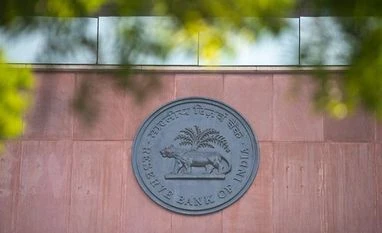 "RBI issues guidelines for merging district central co-op banks with state ones")
WebinarsNew
Deep DiveNew
Explore Business Standard
This is subject to various conditions, including that a proposal should be made by the state government concerned.
The Reserve Bank on Monday said it will consider amalgamation of District Central Co-operative Banks (DCCBs) with State Cooperative Banks (StCBs) subject to various conditions, including that a proposal should be made by the state government concerned.
The Banking Regulation (Amendment) Act, 2020 has been notified for the StCBs and DCCBs with effect from April 1, 2021. Amalgamation of such banks need to be sanctioned by the Reserve Bank of India.
RBI has come out with the guidelines after a few state governments approached it for amalgamation of DCCBs with StCBs as a two-tier Short-term Co-operative Credit Structure (STCCS).
As per the guidelines, RBI will consider proposals for amalgamation "when the state government of the state makes a proposal to amalgamate one or more DCCB/s in the state with the StCB after conducting a detailed study of the legal framework".
Besides, there should be a an additional capital infusion strategy, assurance regarding financial support if required, projected business model with clear profitability and proposed governance model for the amalgamated bank.
The scheme of amalgamation has to be approved by the requisite majority of shareholders. Also, NABARD has to examine and recommend the proposal of the state government.
"The proposal for amalgamation of DCCBs with the StCB will be examined by Reserve Bank in consultation with NABARD and the sanction/ approval will be a two-stage process," the guidelines said.
In the first stage, an 'in-principle' approval will be accorded subject to fulfilment of certain conditions, following which the processes for amalgamation may be initiated by all concerned.
After completion of the first stage, NABARD and RBI may be approached for final approval along with compliance report, as per the guidelines.
The guidelines also said that if as a result of share swap ratio based on net worth, shareholders of some DCCBs cannot be allotted any shares, then the state government should infuse sufficient capital in such lenders to ensure that the shareholders are allotted at least one share each.
(Only the headline and picture of this report may have been reworked by the Business Standard staff; the rest of the content is auto-generated from a syndicated feed.)
First Published: May 24 2021 | 6:59 PM IST


 Connect with us on WhatsApp