Apart from cutting the repo rate by 25 basis points on Wednesday, the Monetary Policy Committee said it was examining ways to improve policy transmission in the system. But some in India Inc said a 50-basis point cut would have been ideal
Subhash Chandra Garg, Economic Affairs Secretary: (The) cut (is)... necessary to converge towards real monetary conditions for sustained growth consistent with India’s potential and for stable, moderate inflation.
Chanda Kochhar, MD and CEO, ICICI Bank: The prudent approach of the central bank in reacting to incoming data in a calibrated manner will reinforce the confidence amongst global investors.
Rajeev Talwar, CEO, DLF and Chairman, NAREDCO: The MPC’s decision to cut the benchmark repo rate could not have come at a more appropriate time. The Indian economy is at a point of inflection.
DECODING THE RATE CUT
Inflation was down to 1.5% in June from 6.1% in July 2016
Farm loan waivers and the 7th Pay Commission award could be inflationary, while the general moderation of price increases will contain upside pressures.
Credit growth lowest in two decades
Stress in banks and corporate balance sheets to deter new investment. New real estate law, and limits on states raising debt and farm loan waivers will dampen capex cycle.
Repo rate cut by 25 bps
The decision of the monetary policy committee is consistent with the neutral stance and some of the upside risks to inflation either reduced or did not materialise.
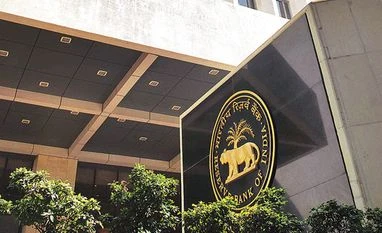
Voicing displeasure over banks not doing enough to reduce lending rates, the Reserve Bank of India (RBI) said an internal group would review the working of the system to improve transmission. The central bank will also explore ways to link bank lending rates directly to market-determined benchmarks. Though the marginal cost of funds-based lending rate (MCLR) system is an improvement over the base rate system, monetary transmission by banks has not been “not entirely satisfactory”, the RBI said in statement on developmental and regulatory policies.
The monetary policy committee (MPC) delivered a 25-basis point cut in the repo rate to six per cent, as was largely expected. Of the six members, five including Governor Urjit Patel, voted for a cut, while one member voted for a status quo. The stance on the policy remains neutral, indicating caution.
Though the Reserve Bank of India’s (RBI’s) move to cut repo rates by 25 basis points brought cheer to property developers, the central bank could have done more to help the sector, they said.
The Reserve Bank of India (RBI) on Wednesday cut its repo rate by 25 basis points to six per cent for the first time since October 2016. This came as the central bank's inflation outlook eased, prompting the measure. But while the rate cut, coming after nearly a year, was welcomed by India Inc, industry captains and executives Business Standard spoke to said that a 50 basis point cut would have been ideal.
After the Reserve bank of India’s (RBI’s) decision to reduce the repo rate by 25 basis points, Governor Urjit Patel and senior colleagues spoke to the media on the Monetary Policy Committee’s (MPC's) decision to maintain a neutral stance, the need for better transmission and other key issues.
The credit policy is no longer a policy or view of the RBI but that of the Monetary Policy Committee. Being based on a consensus from a combination of internal and independent external experts, the flavour changes and dispels the common loosely held view that it can be influenced by external factors.
The rupee strengthened sharply on Wednesday to close at a two-year high of 63.7 to a dollar, highest since July 22, 2015. Generally, when there is a rate cut, the local currency should depreciate. On Wednesday, though, it rose even as the Reserve Bank of India (RBI) cut its policy rate by 25 basis points (bps) and stock indices fell.




