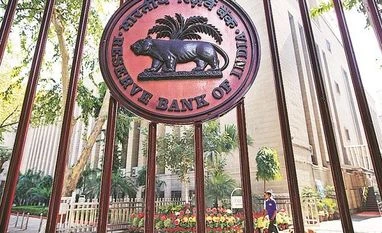
This was done along with domestic intervention. Data shows that for the week ended 20 March, RBI’s reserves dipped $12 billion, the highest weekly fall since October, 2008 when the credit market froze with the collapse of Lehman Brothers.
The central bank intervenes through a clutch of nationalised banks. Now it can have its influence overseas as well, in unregulated markets that operate from Dubai, New York, Singapore, and Hong Kong.
In his speech, the RBI governor said: “The time is apposite to improve efficiency of price discovery.” Later, a notification on the central bank’s website said banks in India, which operate International Financial Services Centre (IFSC) Banking Units (IBUs), can participate in the NDF market from June 1, through their branches in India, IBUs, or their foreign branches.
“This gives an opportunity to the RBI to intervene in the NDF market, which has caused considerable volatility in the past on local exchange rate,” said Abhishek Goenka, managing director at IFA Global, a treasury consultant.
For example, on Friday itself, the spot rate of rupee was around 75, whereas the NDF was showing the value as nearly Rs 77 a dollar. Similarly, one-month forward premium was Rs 1.20-30 from the spot rate, against typically 25-30 paise that it should have in normal course. Now, the offshore rate impacts the local markets in two different ways. One is psychological, where the domestic market opens seeing the offshore rates (which is round the clock, thanks to the dispersed location of these markets).
A foreign bank with global presence can also play arbitrage between the two markets, and influence the domestic exchange rates unduly.
The RBI has been trying to prevent that for a very long time but of no avail.
“It will be a better world for us if there is no NDF market, but we cannot wish it away,” D Subbarao, then RBI governor, said in July 2013. Then a committee headed by former RBI deputy governor Usha Thorat recommended that Indian banks be allowed play in NDF market through their IFSC units. The provocation was that NDF volume was larger than the domestic market, and the RBI could no longer ignore it.
Shaktikanta Das’ announcement made that a reality.
“The NDF move makes sense only if the said Indian banks sell dollars when overseas participants are buying during Non-Indian time of the market. One may suspect that the RBI will do intervention in NDF through these Indian banks so that we do not see 100 paisa moves when we wake up in India,” said Samir Lodha, managing director at QuantArt Market, a treasury consultant.
And RBI’s intervention can really make a difference, say currency dealers.
“If the speculators are aware that the RBI is ready to intervene with $1 billion or more, then nobody will dare to take positions,” Goenka of IFA Global said.
One subscription. Two world-class reads.
Already subscribed? Log in
Subscribe to read the full story →
Smart Quarterly
₹900
3 Months
₹300/Month
Smart Essential
₹2,700
1 Year
₹225/Month
Super Saver
₹3,900
2 Years
₹162/Month
Renews automatically, cancel anytime
Here’s what’s included in our digital subscription plans
Exclusive premium stories online
Over 30 premium stories daily, handpicked by our editors


Complimentary Access to The New York Times
News, Games, Cooking, Audio, Wirecutter & The Athletic
Business Standard Epaper
Digital replica of our daily newspaper — with options to read, save, and share


Curated Newsletters
Insights on markets, finance, politics, tech, and more delivered to your inbox
Market Analysis & Investment Insights
In-depth market analysis & insights with access to The Smart Investor


Archives
Repository of articles and publications dating back to 1997
Ad-free Reading
Uninterrupted reading experience with no advertisements


Seamless Access Across All Devices
Access Business Standard across devices — mobile, tablet, or PC, via web or app
)