Ananth Narayan, senior India analyst at Observatory Group, pointed out that the historical weighted average cost of holdings could have been Rs 55.7 per dollar, assuming all foreign currency assets are valued in dollar. The rupee was at over 70 a dollar in FY21, and therefore, any sales would have reaped rich gains for the RBI. The total gain for nine months was a whopping Rs 50,629.18 crore. It is important to note here that the RBI stepped up its foreign currency assets sales from January onwards. The data released in the RBI bulletins showed that in January and February, the central bank sold $39.9 billion. In March, it sold a further $25.9 billion.
The gross purchase of foreign currencies does not directly net off the gain from gross sales of currencies since the accounting methodology for both are different.
Rather, say analysts, the accounting has been done in a way that the central bank will always gain or lose much higher in case of sales than what its purchases can net off.
For the curtailed nine months, the RBI gross sold a record $85.2 billion and purchased $140.5 billion.
Contingency buffers at bare minimum The RBI’s fall in expenditure was led by a lower transfer to the contingency fund. Now, how much can be transferred to this fund is also determined by the Jalan Committee recommendations. The committee had suggested that at any time, a contingency risk buffer has to be maintained at 5.5-6.5 per cent of the RBI balance sheet.
The RBI, since 2018-19, has kept the buffer at the lowest level of 5.5 per cent.
Since the RBI transferred a healthy Rs 73,615 crore to the contingency fund in 2019-20, the requirement for transfer was greatly reduced in 2020-21, as the balance sheet grew only 6.99 per cent. The RBI transferred only Rs 20,710.1 crore, which is a fall of 71.87 per cent.
According to the Jalan Committee rules, the RBI’s capital and reserves (including contingency risk buffer) have to be at least 20.8 per cent of assets. This share, however, is now at 21.6 per cent, “perilously close to the lower bound of 20.8 per cent”, observed Soumya Kanti Ghosh, group chief economist of State Bank of India. “Subsequently, even a modest appreciation of rupee, say 1.5 per cent from the current level, will result in a lower limit of risk buffer being breached. To sum up, the RBI will be hard-pressed for a larger transfer of dividend in 2021-22,” said Ghosh.

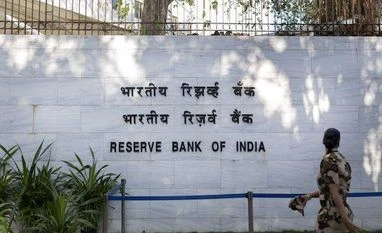 "RBI's forex gains enabled it to give Rs 1-trillion dividend to govt")












 Connect with us on WhatsApp