After witnessing a fall in the gross non-performing assets (NPAs) ratio in March 2019 — the first time in seven years — Indian banks’ GNPA ratio is set to rise again, as a slowing economy and shrinking credit make the share of bad debt in the loan book larger, according to the half-yearly Financial Stability Report (FSR), released by the Reserve Bank of India (RBI) on Friday.
The system has, however, become better in terms of resilience since since March, the reference point used by the last FSR, thanks to the recapitalisation by the government and measures taken by the central bank, the latest report said, adding that the collapse of any large housing finance company won’t pose as big a risk as it had six months ago.
The gross NPA ratio of banks may increase from 9.3 per cent in September 2019 to 9.9 per cent by September 2020 “primarily due to changes in the macroeconomic scenario, a marginal increase in slippages, and the denominator effect of declining credit growth”, it said.
The report is prepared by the sub-committee of the Financial Stability and Development Council (FSDC) and is released by the RBI. Earlier this week, the Trend and Progress Report had said “further improvements in the banking sector hinge around a reversal in macroeconomic conditions”.
Risks posed by geopolitical uncertainties remain an overhang for the overall financial system. Exports might suffer, but the current account deficit would remain under control, the report said. “Reviving the twin engines of consumption and investment while being vigilant about spillovers from global financial markets remains a critical challenge,” the FSR said.
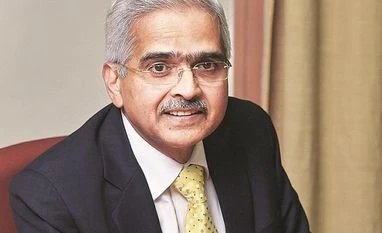
Aggregate demand slackened in the second quarter of 2019-20, further extending the growth deceleration. Writing the foreword of the report, RBI Governor Shaktikanta Das said the challenge was to “ensure transmission of monetary policy impulses to the advantage of real economies and not to aid build-up of froth in financial markets. We need to be mindful of the ‘cobra effect’ ”.
Cobra effect refers to the situation when a solution to a problem makes the problem worse. On its part, the RBI has endeavoured to provide a responsive and proactive monetary policy in an economic environment wherein sources of vulnerabilities are continuously interacting, Das said, reemphasising the importance of good corporate governance across the board, which, according to the governor, “is the most significant factor that can lift the efficiency of our economy to its full potential”.
While the banking sector shows signs of stabilisation, PSBs should improve their performance and should build buffers against disproportionate operational risk losses, while “private sector banking space also needs to focus on aspects of corporate governance,” the governor said.
The market is becoming more discerning on prudential concerns around NBFCs, which continue to show signs of restructuring of their underlying business models, according to the RBI governor.
Credit growth of banks was 8.7 per cent year-on-year in September, while deposits grew 10.2 per cent. This is the first time since Q2FY17 that credit growth fell short of deposit growth, the report observed. Credit fell ‘across the board’ for commercial sector. However, private sector banks registered credit growth of 16.5 per cent.
While the GNPA ratio remained unchanged at 9.3 per cent between March and September 2019, the provision coverage ratio (PCR) of the banking system rose to 61.5 per cent in September 2019 from 60.5 per cent in March 2019 “implying increased resilience of the banking sector”, the report said.
Bilateral exposures between entities in the financial system witnessed marginal decline. Private sector banks saw the highest YoY growth in their payables to the financial system, while insurance companies recorded the highest YoY growth in their receivables from the financial system. The size of the inter-bank market continued to shrink with inter-bank assets amounting to less than 4 per cent of the total banking sector assets as at end-September 2019, the report said. This reduction, along with better capitalisation of public sector banks reduced the contagion risk under various scenario compared with March 2019.
Still, banks may have the capital adequacy ratio below the minimum regulatory level of 9 per cent by September 2020 without considering any further planned recapitalisation, the report said. If the macroeconomic conditions deteriorate, five banks might record the capital adequacy ratio of below 9 per cent under a severe stress scenario.
However, the report said 49 of the 52 banks would remain resilient for meeting day-to-day liquidity requirements in case of sudden and unexpected withdrawals of around 10 per cent of the deposits and utilisation of 75 per cent of the credit lines.
The RBI’s latest systemic risk survey (SRS) showed that all the major risk groups, such as global risks, risk perceptions on macroeconomic conditions, financial market risks and institutional positions were perceived as medium risks affecting the financial system. But the “perception of domestic growth risk, fiscal risk, corporate sector risk and banks’ asset quality risk increased between the earlier survey (April 2019) and the current survey.”
The survey participants felt that resolution of the legacy bad assets under the IBC was essential to enable the banking system to support the aspirations of economic growth.
According to another set of survey of 13 banks with regard to assets that were initially assigned to be resolved through the prudential framework (as of June 30), an inter-creditor agreement is yet to be signed for exposures amounting to Rs 33,610 crore while the same has been signed with respect to aggregate exposures of Rs 96,075 crore. However, resolution plan has been implemented only with respect to one borrower with a reported exposure of Rs 1,617 crore.
Mutual funds were the largest net providers of funds to the financial system. Their gross receivables were around Rs 9.40 trillion, or around 37.8 per cent of their average assets under management (AUM) as on September 2019, and their gross payables were around Rs 57,355 crore as at end-September 2019. The top-three recipients of their funds were banks followed by NBFCs and HFCs.

 "Slowdown, credit squeeze to increase NPA, but banks more resilient now: RBI")











