At a time when its peers are focused on companies, standalone health insurance company Max Bupa Health insurance has been pursuing the retail segment for business growth.
Manasije Mishra, chief executive officer, talks to
M Saraswathy about plans for the current financial year, the company's fourth year of operation. Edited excerpts:
The new health insurance guidelines will be in force soon. Did you have to re-file most of your products? The new regulations have been discussed between the Insurance Regulatory and Development Authority (Irda) and insurers in several meetings to understand the industry's concerns. The regulator has, however, made it clear that if there are products that are almost compliant with the revised guidelines, except for some terms and conditions and definitions, they can be self-certified. This certification needs to be made by the CEO and the actuary of the company; and the certification does not need to be submitted to Irda, unless there is a change in product structure or pricing. That is a good start. Otherwise, they would have got 100-plus products to clear.
Some innovations of Max Bupa, like guaranteed renewability of products, have found way into the regulation. We expect that very few of our products would have to be re-filed, since most of them will be through self certification. By and large, most of our products are already compliant. Hence, the changeover is likely to be smooth.
While your peers are going big on corporate business, why have you continued to focus on retail? Most companies are 50-50 and most are biased towards corporate. We are 80-20 in favour of retail. We have chosen to focus on selling products to individuals. While it is more expensive and difficult to procure business in the business-to-customer (B2C) segment, it is a much more sustainable business. This year, too, we will maintain a 75-25 ratio for individual versus corporate customers.
Co-branding of insurance products is an area that is being discussed by the industry. Do you see an opportunity for possible tie-ups in this segment? Irda has brought out detailed guidelines on co-branding of insurance products in its new health regulations. Co-branding as a concept has not worked so far. This is something where there is opportunity for life and heath insurers to work together.
What are your capital infusion plans for FY14? We are entering our fourth year of operation. Insurance requires patient shareholders with deep pockets. We should be around Rs 550 crore of capital by the end of this fiscal. We are planning to infuse Rs 100 crore this year, taking the total capital base to Rs 550 crore. This is as per our plan.
Your losses have come down marginally for FY13, compared to the previous financial year. What is your outlook on profitability this year? On a year-on-year basis, the net loss will go down. But it is too early to look at a break-even at present. However, our net losses will continue to come down. This is in spite of the fact that the cost of acquiring retail customers is high. By focusing more on individual customers, we chose a tougher path of doing business.
You are a part of the Rashtriya Swasthya Bima Yojana segment. Will you be tendering for more districts this year? We are offering RSBY services in districts of Gopalganj and Madhubani in Bihar. We will be tendering in other areas as and when government contracts come up. RSBY is a good example of public-private partnership. In general, medical procedures are not codified in India. In cities like Mumbai, for instance, medical-care pathway is not codified and depends on individual doctors. But in rural India, due to RSBY scheme, clinical pathways for 2,000 procedures have been codified and the government has negotiated the cost of the procedures. We estimate a Rs 30,000 cover is worth at least Rs 50,000 due to the discounts.
Apart from this, what are the price-based incentives that Max Bupa is planning for smaller towns?
Differential pricing structure for different cities and towns is an innovation that we have done. One of our product-Health Companion has a different pricing structure wherein there is a different pricing for different areas. The policy has a three-tiered tariff. Customers living in the eight metros will pay the highest charges. Then come the state capitals, and finally the rest of India. The premiums are based on the area in which the buyer resides. The lower charges for Tier II and Tier III cities reflect the lower cost of healthcare in those areas as compared to metros. But you can claim from anywhere, as we know that people go for treatment within 10 kilometers of their home.
For instance, A 25-year-old living in Delhi will pay Rs 2,263 a year for a cover of Rs 2 lakh. If he was living in Chandigarh, a tier II city, he would pay Rs 2,037. But if he was in Agra, a tier III city, the premium would be only Rs 1,811.
For FY14, what are the new areas of expansion in terms of distribution?
We are interested in bancassurance, as an area of distribution. Irda has now allowed banks to sell insurance policies of one life insurer, one non-life insurer and one standalone health insurer. So, we will enter into new partnerships this fiscal to expand our distribution base.
Further, we have also been using the banking correspondent (BC) model to sell insurance in rural areas. The BC terminal has been programmed, we have been issuing on the spot policies, while claims are being payed using RSBY network. However, we are doing this on a pilot basis and hence haven't scaled it up presently.

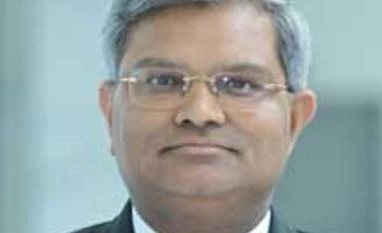 "We are focusing on selling products to individuals: Manasije Mishra")

