Withdrawal of notes not due to elections: Rajan
Says inflation a destructive disease
BS Reporter New Delhi A day after the Reserve Bank of India (RBI) withdrew from circulation, all notes issued before 2005, the central bank governor on Thursday said it was not an attempt at demonetisation.
Defending the move, which is being seen as a step to check black money before elections, Rajan said the assumptions were not correct as the RBI's motive was barely to replace old notes with more effective ones with greater security features.
"I understand people are making different interpretations. Unfortunately, that should not be the interpretation…I have to say that it has nothing to do with elections," Rajan said, replying to a query from CBI Director Ranjit Sinha on the significance of the decision before the polls.
The RBI governor said notes issued prior to 2005 had become less secure and there has been a long standing demand to replace them. The finance ministry had also sought their withdrawal.
On Wednesday, RBI had said that from April 1, 2014, the public would be required to approach banks for exchanging these notes. Though these notes would continue to be the legal tender, to exchange more than 10 pieces of Rs 500 and Rs 1,000 notes from July 1, non-customers will have to furnish proof of identity and residence to the concerned bank branch.
Ahead of the monetary policy review on January 28, Rajan said inflation is a destructive disease and despite complaints from the industry, RBI had to keep the interest rates high to tame inflation, as it was hurting growth in the long-run.
"We have to examine the Urjit Patel Committee report. We can't push inflation under the carpet as a central banker. We have to deal with it," he said speaking at the 8th R N Kao Memorial Lecture organised by the Research and Analysis Wing.
The Patel committee report to 'Revise and Strengthen the Monetary Policy Framework' has suggested a shift to flexible inflation targeting with consumer price index inflation as the nominal anchor, instead of the wholesale price index used at present.
Rajan also stressed that there was a need to expedite clearances for stalled projects. "The fact is that we need to respect environmental rules. But that does not mean we delay projects. Let's make regulations better, not less, not more but which is relatively easy to enforce," he said.
To improve the competitiveness of public sector banks, he said in the coming months RBI would discuss with stakeholders what needs to be done to improve their stability, efficiency and productivity.
"In the coming weeks, we will roll out more measures to improve the quality and depth of the government securities market. We will then turn to money markets and corporate markets," he added.
Meanwhile, during the day, the RBI governor also visited his alma mater and asked children to make the most of the opportunities offered by economic liberalisation.

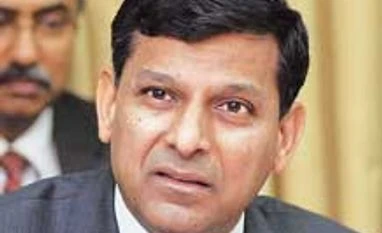 "Withdrawal of notes not due to elections: Rajan")


 Connect with us on WhatsApp