
Revised railway flexi-fares to start from Mar 15; advance bookings commence
The decision to tweak the fares in the Rajdhani, Duronto and Shatabdi trains was taken on October 31 this year
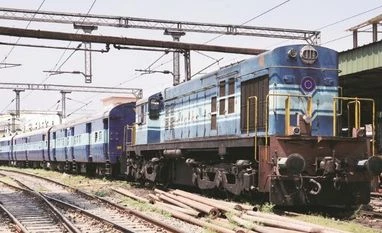 "Revised railway flexi-fares to start from Mar 15; advance bookings commence")
Explore Business Standard
The decision to tweak the fares in the Rajdhani, Duronto and Shatabdi trains was taken on October 31 this year
The revised flexi-fares for premier trains will be applicable from March 15, 2019 -- and advance bookings have commenced as the changes required in the software have been executed.
Aimed at giving relief to passengers and also offering convenience and competitive fares to passengers, as well as generating revenue for the Indian Railways, the decision to tweak the fares in the Rajdhani, Duronto and Shatabdi trains was taken on October 31 this year.
However, it could not be implemented because of the need for changes in the ticketing system's software.
The flexi-fare scheme introduced for 44 Rajdhanis, 46 Shatabdis and 52 Duronto trains in September 2016 has drawn criticism from various quarters, including passengers and the Comptroller and Auditor General (CAG).
As per the system, the tariff goes up as the occupancy rate increases. The fare increases by 10 per cent as every 10 per cent of berths are occupied with a cap of 1.5 times of the base fare.
"It has also resulted in many vacant berths due to high prices in certain trains. So there was a review committee which looked into the issue and recommended rationalisation of the flexi-fare system," a senior Railway Ministry official told IANS.
As recommended, flexi-fare was completely removed from 15 trains, which include the Kalka-New Delhi, New Delhi-Ludhiana and Dibrugarh-Guwahati Shatabdis.
The flexi-fare system was scrapped for trains that have shown 50 per cent utilisation -- or, in other words, bookings -- said the official.
Flexi-fares were also removed from 32 trains during the lean period (February, March and August). The trains included the Bilaspur-New Delhi and Ranchi-New Delhi Rajdhanis and the Pune-Secunderabad, New Delhi-Amritsar, Kathgodam-Anand Vihar and Ranchi-Howrah Shatabdis.
The revised structure also offers the current cap of 1.5 times to be reduced to 1.4 times the tariff in all classes.
The railways earned about Rs 8 billion from flexi-fares in the last fiscal.
First Published: Nov 18 2018 | 1:00 PM IST


