Fiscal deficit target optimistic

We believe some of the other expenditure such as bank recapitalisation, petroleum, and fertiliser subsidy to require an upward revision that will push the overall expenditure
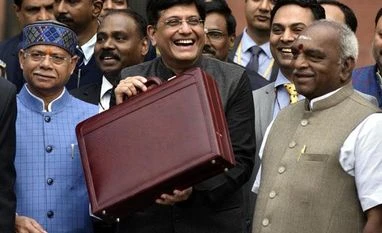
Interim Budget 2019, Budget 2019
Interim Budget 2019: Finance Minister Piyush Goyal will present the Budget
Naresh Takkar
Last Updated : Feb 02 2019 | 11:32 PM IST
While the government reiterated its commitment of achieving the fiscal deficit target of 3 per cent of gross domestic product (GDP) by 2020-21 (FY21), it has nominally revised upwards the fiscal deficit to 3.4 per cent for 2018-19 (FY19) and 2019-20 (FY20), despite a sizeable outlay on the income-support scheme for small farmers aggregating to Rs 20,000 crore in FY19 and additional Rs 75,000 crore for FY20.

The overall revenue receipt growth is budgeted at 14 per cent. However, growth in some of the revenue receipts such as the central goods and services tax (CGST) has been assumed much higher at 21 per cent, in addition to sizeable disinvestments target of Rs 90,000 crore. Despite sizable outlay on the income-support scheme, the expenditure growth is projected at 13.4 per cent or Rs 3.27 trillion for FY20. We believe some of the other expenditure such as bank recapitalisation, petroleum, and fertiliser subsidy to require an upward revision that will push the overall expenditure. Accordingly, we expect further increase in the budgeted expenditure for FY20 and put pressure on fiscal deficit unless a higher than projected growth in revenue materialises. 
 
Naresh Takkar, Managing director and group chief executive officer, Icra

The mobilisation from the small saving scheme is budgeted at Rs 1.52 trillion, which has resulted in a limited increase in net market borrowing of Rs 4.73 trillion for FY20 as against Rs 4.22 trillion for FY19. The ability to mobilise budgeted amount through small savings will be important for market borrowing programme of the GoI and yields in the debt market. 

Further, the quality of expenditure is also showing signs of deterioration with capital expenditure rising by only 6 per cent whereas revenue expenditure is projected to rise by 13.4 per cent, which is expected to be inflationary.

One subscription. Two world-class reads.

Already subscribed? Log in

Subscribe to read the full story →
*Subscribe to Business Standard digital and get complimentary access to The New York Times

Smart Quarterly

₹900

3 Months

₹300/Month

SAVE 25%

Smart Essential

₹2,700

1 Year

₹225/Month

SAVE 46%
*Complimentary New York Times access for the 2nd year will be given after 12 months

Super Saver

₹3,900

2 Years

₹162/Month

Subscribe

Renews automatically, cancel anytime

Here’s what’s included in our digital subscription plans

Exclusive premium stories online

  • Over 30 premium stories daily, handpicked by our editors

Complimentary Access to The New York Times

  • News, Games, Cooking, Audio, Wirecutter & The Athletic

Business Standard Epaper

  • Digital replica of our daily newspaper — with options to read, save, and share

Curated Newsletters

  • Insights on markets, finance, politics, tech, and more delivered to your inbox

Market Analysis & Investment Insights

  • In-depth market analysis & insights with access to The Smart Investor

Archives

  • Repository of articles and publications dating back to 1997

Ad-free Reading

  • Uninterrupted reading experience with no advertisements

Seamless Access Across All Devices

  • Access Business Standard across devices — mobile, tablet, or PC, via web or app

Next Story



