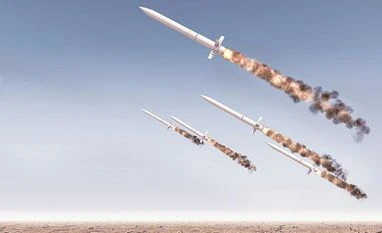
5 nuclear-weapon states issue 1st joint statement on nuke war, arms race
China, France, Russia, the United Kingdom and the US reiterated their commitment to de-targeting and reaffirmed that none of their nuclear weapons was targeted at each other or at any other State.
ANI US The leaders of China, France, Russia, the United Kingdom and the United States on Monday (local time) reiterated their commitment to de-targeting and reaffirmed that none of their nuclear weapons was targeted at each other or at any other State.
In a joint statement, the leaders of the five countries said "we affirm that a nuclear war cannot be won and must never be fought."
"We affirm that a nuclear war cannot be won and must never be fought. As nuclear use would have far-reaching consequences, we also affirm that nuclear weapons--for as long as they continue to exist--should serve defensive purposes, deter aggression, and prevent war. We believe strongly that the further spread of such weapons must be prevented," the statement read.
The five permanent member states of the UN Security Council also reaffirmed the importance of addressing nuclear threats and emphasised the importance of preserving and complying with their bilateral and multilateral non-proliferation, disarmament, and arms control agreements and commitments.
"We remain committed to our Nuclear Non-Proliferation Treaty (NPT) obligations, including our Article VI obligation "to pursue negotiations in good faith on effective measures relating to cessation of the nuclear arms race at an early date and to nuclear disarmament, and on a treaty on general and complete disarmament under strict and effective international control," the statement read further.
"We each intend to maintain and further strengthen our national measures to prevent unauthorized or unintended use of nuclear weapons. We reiterate the validity of our previous statements on de-targeting, reaffirming that none of our nuclear weapons are targeted at each other or at any other State," it added.
The five countries also underlined their desire to work with all states to create a security environment more conducive to progress on disarmament with the ultimate goal of a world without nuclear weapons with undiminished security for all.
They intend to continue seeking bilateral and multilateral diplomatic approaches to avoid military confrontations, strengthen stability and predictability, increase mutual understanding and confidence, and prevent an arms race that would benefit none and endanger all.
"We are resolved to pursue constructive dialogue with mutual respect and acknowledgment of each other's security interests and concerns," the statement read.
This is the first time for leaders of the five Nuclear-Weapon States to issue such a joint statement, which has demonstrated the political will of the five states to prevent nuclear wars, and given their common voice of maintaining global strategic stability and reducing the risk of nuclear conflicts, Chinese vice Foreign Minister Ma Zhaoxu said.
(Only the headline and picture of this report may have been reworked by the Business Standard staff; the rest of the content is auto-generated from a syndicated feed.)

 "5 nuclear-weapon states issue 1st joint statement on nuke war, arms race")


 Connect with us on WhatsApp