Al-Qaida has re-established a presence in Afghanistan and the Islamic State group has become a serious threat, the Afghan national security adviser warned, saying the country was in danger of again becoming a safe haven for terrorists and calling for US and NATO military backing to help drive them out.
The warning by Mohammad Hanif Atmar follows the announcement earlier this month by President Barack Obama that the US would keep 9,800 troops in Afghanistan through most of next year, casting aside a pledge to withdraw most US forces before leaving office.
Obama cited the fragile security situation in the face of a resurgent Taliban.
Speaking to The Associated Press in an interview late Saturday, Atmar said al-Qaida, the Taliban, the Islamic State group and other insurgents, including the brutal Haqqani network, which has ties to the Taliban, "are morphing."
"They have not been degraded, they have regenerated themselves," he said.
Atmar warned the insurgent groups are reinventing themselves, joining forces, and drawing funds and support from outside as they take advantage of a perceived weakness of Afghan forces following the end of the US-led international combat mission last year.
Highlighting Afghanistan's need for continued support from the US and NATO, the Taliban overran the key northern city of Kunduz on September 28 -- their first seizure of a major urban area since being toppled in 2001 by the US invasion -- before being driven out over a period of two weeks.
The Taliban then threatened cities in different corners of the country, including Lashkar Gah, capital of southern Helmand province, and Maymana, capital of northwestern Faryab.
The Taliban have been stretching Afghan forces to the limit this year, and the shift in tactics -- from scattered shootings and bombings to coordinated assaults on cities -- has posed a challenge to a force accustomed to coming in behind US troops to hold territory, rather than going on the offensive.
This has provided fertile ground for insurgent groups to move into Afghanistan from other countries, particularly Pakistan, where a military campaign to eliminate their safe havens from the tribal areas of North Waziristan has pushed militants into Afghanistan.
Atmar said several groups are now using Afghanistan as a staging ground to reach their "home countries," including China, Uzbekistan and other Central Asian states, and Russia.
"What needs to be well understood is that the symbiotic network of terrorists that we are confronted with is going to be a threat to every country in this region and by extension the whole world," Atmar said.
"We are hoping that assessment is shared not just by Central Asia, Russia and China, but by our neighbours to the south and east," he said, referring principally to Pakistan.

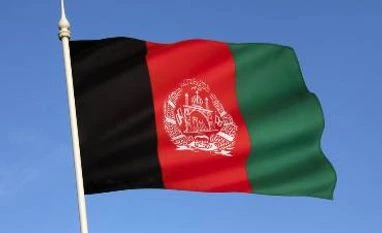 "Afghan security adviser warns of risk from IS, Al-Qaida")


 Connect with us on WhatsApp