
Article 50 triggered: But is a Brexit deal really possible in two years?
UK govt will approach negotiations from a much more settled political and economic condition than EU
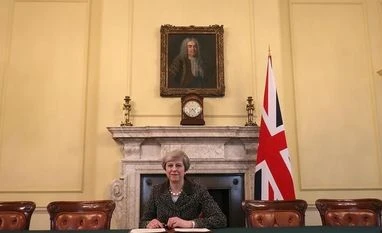 "Article 50 triggered: But is a Brexit deal really possible in two years?")
premium
WebinarsNew
Deep DiveNew
Explore Business Standard
UK govt will approach negotiations from a much more settled political and economic condition than EU
The phoney war phase of Brexit is brought to an end by the UK government’s decision to formally submit its request to leave the European Union. After a protracted period of speculation, now begins the two-year formal countdown for Britain to depart from the EU.
But the question of whether Brexit will be completed in an orderly fashion within that timeframe will be determined between now and the summer.
Three key objectives will need to be realised by then. First, the divorce settlement. This is the outline of the exit agreement on what the UK owes the EU in funding commitments and otherwise. Then the two sides will need to agree on the contours of their trade and immigration relationship. The UK wants to leave the EU’s single market and customs union and strike a comprehensive free trade and investment agreement instead. Both sides need to agree on that, as well as how immigration is going to work in the future.
There will need to be a deal on the principle of a transition agreement. This is to cover the period of time between the end of the two-year negotiation and any successor agreement coming into force. This is to avoid any disconnection (a cliff-edge Brexit) between the current membership relationship and whatever comes next.
Ticking clock
Realistically, a full Brexit agreement cannot be reached by March 2019 but its broad principles will need to be determined before the UK’s EU exit to allow for clarity on what will need to be covered in a transition agreement. Reaching a consensus between the UK and the EU on what should be included in the exit, successor and transition agreements by the summer of 2017 would allow for a substantive period of negotiations (and the ratification of exit and transition agreements) by the end of the two-year period covered under the provisions of Article 50.
But this is unlikely to happen either. This is due to the different political and economic forces at work on both sides. The UK government will approach the negotiations from a much more settled political and economic condition than the EU. Prime Minister Theresa May leads a party and government which is now overwhelmingly committed to Brexit. For the foreseeable future she faces no serious parliamentary, party, public opinion or electoral threat to her commitment to see through on her plans.
In contrast, the EU faces a period of uncertainly in political leadership. Elections loom in France, Germany and Ireland. More problematically, substantive disagreements exist between the member states over the future goals of the EU project – and especially whether they should loosen or deepen their integration. A lack of a settled consensus among the member states on the future shape of the EU will significantly affect their ability to agree on what they, as a group, want their relationship with the UK to be in the future.
They do agree, however, that the divorce settlement is a priority. They’ve made this clear through very public statements about the UK’s outstanding financial commitments to the EU, even before Article 50 was triggered.
The UK, though, looks to be hardening its negotiating stance on the divorce settlement. The continuing absence of a “Brexit shock” to the economy has provided a political morale booster by creating the sense that the UK can weather the economic consequences of EU departure. An extended period of megaphone diplomacy over UK debts to the EU will make the political climate for consensus on both sides for the outlines of the exit, transition and successor agreements impossible.
In the absence of agreement by the summer of 2017 on the broad objectives for the two-year Article 50 timetable the negotiations will settle into a condition of “muddling through”. Work will continue on the technical and legal aspects of Brexit but the significant questions about the shape of the future EU-UK relationship will remain undecided after 2019. The UK is due to have a general election in 2020 – and its future relationship with the EU could be a key issue.
Richard Whitman, Director of the Global Europe Centre, University of Kent and Senior Visiting Fellow, Chatham House, University of Kent
This article was originally published on The Conversation. Read the original article.
Already subscribed? Log in
Subscribe to read the full story →

3 Months
₹300/Month
1 Year
₹225/Month
2 Years
₹162/Month
Renews automatically, cancel anytime

Premium stories handpicked daily by our editors


News, Games, Cooking, Audio, Wirecutter & The Athletic
Digital replica of our daily newspaper — with options to read, save, and share


Insights on markets, finance, politics, tech, and more delivered to your inbox
In-depth market analysis & insights with access to The Smart Investor


Repository of articles and publications dating back to 1997
Uninterrupted reading experience with no advertisements


Access Business Standard across devices — mobile, tablet, or PC, via web or app
First Published: Mar 30 2017 | 8:57 AM IST


 Connect with us on WhatsApp