The Taliban took control of Afghanistan in 1996, enforcing harsh conditions and rules following their strict interpretation of Islamic law.
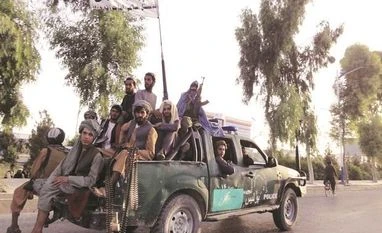
The Taliban have been taking back control of Afghanistan with the withdrawal of foreign troops. Rahmut Gul/AP/AAP
Under their rule, women had to cover themselves and only leave the house in the company of a male relative. The Taliban also banned girls from attending school, and women from working outside the home. They were also banned from voting.
Women were subject to cruel punishments for disobeying these rules, including being beaten and flogged, and stoned to death if found guilty of adultery. Afghanistan had the highest maternal mortality rate in the world.
The past 20 years
With the fall of the Taliban in 2001, the situation for women and girls vastly improved, although these gains were partial and fragile.
Women now hold positions as ambassadors, ministers, governors, and police and security force members. In 2003, the new government ratified the Convention on the Elimination of all Forms of Discrimination Against Women, which requires states to incorporate gender equality into their domestic law.
The 2004 Afghan Constitution holds that “citizens of Afghanistan, man and woman, have equal rights and duties before the law”. Meanwhile, a 2009 law was introduced to protect women from forced and under-age marriage, and violence.
According to Human Rights Watch, the law saw a rise in the reporting, investigation and, to a lesser extent, conviction, of violent crimes against women and girls.
While the country has gone from having almost no girls at school to tens of thousands at university, the progress has been slow and unstable. UNICEF reports of the 3.7 million Afghan children out of school some 60% are girls.
A return to dark days
Officially, Taliban leaders have said they want to grant women’s rights “according to Islam”. But this has been met with great scepticism, including by women leaders in Afghanistan. Indeed, the Taliban has given every indication they will reimpose their repressive regime.
In July, the United Nations reported the number of women and girls killed and injured in the first six months of the year nearly doubled compared to the same period the year before.
In the areas again under Taliban control, girls have been banned from school and their freedom of movement restricted. There have also been reports of forced marriages.

 "As Taliban return, 20 years of Afghan women's progress looks set to vanish")











