Home / World News / AstraZeneca, Qure.ai to bring AI solutions to detect lung cancer
AstraZeneca, Qure.ai to bring AI solutions to detect lung cancer
The partnership aims to harness and scale-up the use of this technology to improve early-stage detection of lung cancer in the markets involved, to reduce mortality rates and improve patient outcomes.
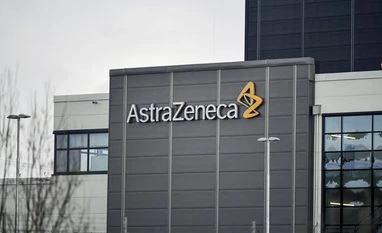
An AstraZeneca office building. File Photo: Bloomberg
British-Swedish pharmaceutical firm AstraZeneca on Monday announced a a partnership with Mumbai-based Qure.ai, a healthcare startup to integrate innovative artificial intelligence (AI) solutions for the early detection of lung cancer in patients across India.
AstraZeneca and Qure.ai will be covering the emerging market regions in Latin America, Asia, Middle East and Africa.
The partnership aims to harness and scale-up the use of this technology to improve early-stage detection of lung cancer in the markets involved, to reduce mortality rates and improve patient outcomes.
As part of the strategic collaboration, AstraZeneca will work with Qure.ai to explore the application of deep learning algorithms to identify patients with suspicious radiographic lung abnormalities and support their referral to arrive at a firm diagnosis.
"Innovations such as this are critical for boosting the capabilities of healthcare ecosystem, and this partnership supports our bold ambition of eliminating cancer as a cause of death," Leon Wang, AstraZeneca EVP International and Country President, China, said in a statement.
The collaboration will also focus on overcoming barriers that limit access to diagnostic tools to support early lung cancer detection.
The end goal of the partnership is to improve referral and diagnostic pathways for patients with possible lung cancers and increase lung cancer detection at an earlier stage - improving the patient journey and ultimately reducing lung cancer mortality rates around the world.
"We are delighted to partner with AstraZeneca in the early detection of lung cancer using our AI solution for automated interpretation of chest X-rays," said Prashant Warier, CEO and Co-Founder, Qure.ai.
According to the company, the software's ability to process analogue and digital chest X-rays in a minute can help physicians in incidental diagnoses of lung cancer by pointing out small lung nodules which could have been missed in a cursory review.
The solution also detects several other types of abnormalities from chest X-rays that are linked to infection, injuries and chronic diseases, and flags these to the physician, potentially creating other diagnostic pathways.
(Only the headline and picture of this report may have been reworked by the Business Standard staff; the rest of the content is auto-generated from a syndicated feed.)

 "AstraZeneca, Qure.ai to bring AI solutions to detect lung cancer")


 Connect with us on WhatsApp