
Australian central bank hikes interest rate for first time in over decade
Figures released by the Australian Bureau of Statistics (ABS) last week showed inflation had reached a two-decade high of 5.1 per cent in the last 12 months.
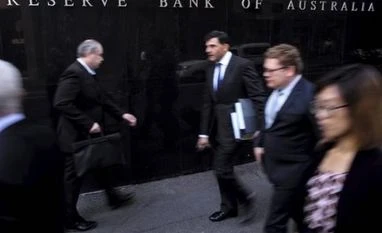 "Australian central bank hikes interest rate for first time in over decade")
WebinarsNew
Deep DiveNew
Explore Business Standard
Figures released by the Australian Bureau of Statistics (ABS) last week showed inflation had reached a two-decade high of 5.1 per cent in the last 12 months.
After dropping interest rates down to historic low levels during the pandemic, the Reserve Bank of Australia (RBA) has hiked interest rates by 0.25 to 0.35 per cent, the first rise since 2010, in an effort to calm growing inflation.
RBA Governor Philip Lowe said that it was now "the right time" to withdraw accommodative monetary support designed to help the Australian economy through the pandemic.
"The economy has proven to be resilient and inflation has picked up more quickly, and to a higher level than was expected," said Lowe.
Figures released by the Australian Bureau of Statistics (ABS) last week showed inflation had reached a two-decade high of 5.1 per cent in the last 12 months. This has prompted widespread calls for the central bank to step in to deal with inflation that has begun to stretch the budgets of Australians.
Lowe said that while the Reserve Bank expects further rises in inflation in the short-term as supply-side demand is resolved, inflation is expected to return to the RBA's target of 2 to 3 per cent.
"The central forecast for 2022 is for headline inflation of around 6 per cent and underlying inflation of around 4.75 per cent, by mid-2024," he said.
Professor Peter Swan from the University of New South Wales's (UNSW) Business School told Xinhua on Tuesday that the move defied expectations of a 0.10 increase.
"You'd think it would take them 10 months to go up one per cent... it's setting now the expectation that interest rates will move up very rapidly, and much faster than anyone expected."
He added that at this rate it would mean interest rates would increase by 1 per cent every four months, which for a typical Sydney mortgage holder would add about 450 Australian dollars (about 320 U.S. dollars) to their mortgage payments, and 900 Australian dollars (about 640 U.S. dollars) by the end of the year.
"That's going to be politically painful because one and a half million homeowners have never encountered interest rate rises before."
Swan said Australia's inflationary troubles would not be a quick fix, and interest rates would likely need to reach 2 to 3 per cent before they start having an effect.
(Only the headline and picture of this report may have been reworked by the Business Standard staff; the rest of the content is auto-generated from a syndicated feed.)
First Published: May 03 2022 | 12:16 PM IST


 Connect with us on WhatsApp