
Ban palm oil import from FGV in Malaysia: Activists to US customs
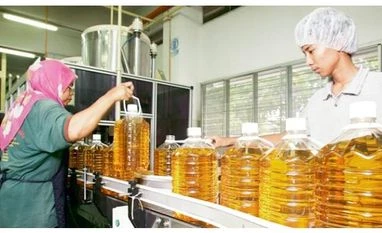
The world's top producer of crude palm oil produced 2.8 million tonnes tonnes of the edible oil last year
 "Ban palm oil import from FGV in Malaysia: Activists to US customs")
Explore Business Standard
The world's top producer of crude palm oil produced 2.8 million tonnes tonnes of the edible oil last year
A group of non-governmental organizations is calling on US authorities to ban imports of palm oil from Malaysia's FGV Holdings and investigate the company, citing concerns of forced labour and human trafficking on its plantations.
US-based NGOs International Labor Rights Forum (ILRF), Rainforest Action Network (RAN) and SumOfUs said they had filed a complaint with the US Customs and Border Protection (CBP), which is required to deny entry of goods made with forced labour.
"We are calling on US Customs to enforce current law and prevent American consumers from unknowingly funding forced labour with each illicit FGV palm oil product sold," said Judy Gearhart, executive director of the International Labor Rights Forum.
"CBP needs to issue a detention order on all imports of them, and direct port managers to block their release into the US We hope this will trigger a CBP investigation into FGV's operations and the complaints of forced labour within their estates."
FGV said in a statement on Thursday that it had always admitted to oversights and mistakes in the past, "all of which are being or have already been corrected."
"However, FGV is fully aware that there is always room for further improvement, and we are always grateful when stakeholders engage with us or suggest refinements that will benefit everyone. FGV is committed to ethical and responsible development," it said.
The world's top producer of crude palm oil produced 2.8 million tonnes tonnes of the edible oil last year.
About 5 per cent of its revenue from external customers in 2018 was from the United States and Canada, according to its annual report. FGV also has a joint venture oleochemical business with Procter & Gamble in Malaysia.
FGV had grappled with management shakeups and allegations of corruption in recent years, and is currently cutting costs by trimming staff and divesting assets.
After a Wall Street Journal report in 2015 detailed abuses faced by foreign workers at FGV's plantations, the company withdrew its certificates of sustainability from its processing mills in 2016 to address concerns in its supply chain.
Global palm industry watchdog Roundtable on Sustainable Palm Oil (RSPO), which issues the sustainability certificates, found "exploitative" labour practices, dire living conditions for workers and lax oversight of contractors that hire the company's foreign labour in an investigation into the company last year.
In response to that investigation, FGV said at the time that it had frozen all new recruitment of workers from external contractors, and negotiated to directly employ workers contracted through third parties to avoid displacing existing workers.
It said it would also revise benefits enjoyed by its plantation workers and absorb the costs of basic necessities, including food supplies given to its workers.
FGV's statement on Thursday added that it recently adopted a group sustainability policy underscoring its commitment to the principles of human rights, no deforestation or planting on peat, and climate justice, among others.
As of August, 34 out of 68 mills owned by FGV have had their sustainability certifications reinstated.
Palm oil futures decline 2%
Malaysian palm oil futures declined 2 per cent at the close of trade on Thursday, weighed down by mounting concerns of a US recession and technical selling after seven consecutive days of gains.
The benchmark palm oil contract for October delivery on the Bursa Malaysia Derivatives Exchange was last down 2 per cent at 2,175 ringgit ($518.85) per tonne, though still holding near a four-month high.
Palm oil prices have gained 5 per cent since the start of the month, and rose to a four-and-a-half-month high of 2,223 ringgit in its previous trading session.
“The market is down over the recession concerns," said a Kuala Lumpur-based trader. Another trader said palm had weakened due to technical selling after the past week's continuous gains.
The US Treasury yield curve inverted for the first time since 2007 on Wednesday, a sign of investor concern the world's biggest economy may be heading for recession.
Palm was also earlier weighed down by weaker crude oil, which slipped further below $60 a barrel, pressured by recession concerns and a surprise boost in US crude inventories.
Palm oil prices are impacted by movements in crude oil as the vegetable oil is used as feedstock to make biodiesel, a fuel substitute.
In other related edible oils, US soyoil futures on the CBOT was down 0.6 per cent on Thursday, while the September soyoil contract on the Dalian exchange rose 0.3 per cent .
The Dalian September palm oil contract fell 0.6 per cent.
Palm oil prices are also affected by movements in related oils that compete in the global vegetable oils market.
First Published: Aug 15 2019 | 9:59 PM IST

