With oil market in limbo, here's how analysts see things playing out

If there's no increase in production, then oil at $85 to $90 a barrel is on the cards, Fereidun Fesharaki, chairman of industry consultant FGE, said in a Bloomberg TV interview

Oil
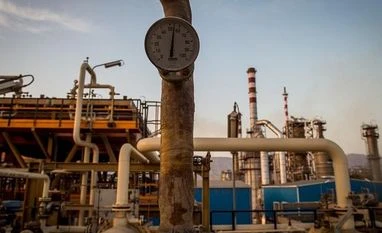
The release of Saudi Aramco’s official selling prices for August in the coming days should provide more clarity | Photo: Bloomberg
Saket Sundria and Sharon Cho | Bloomberg
4 min read Last Updated : Jul 06 2021 | 3:53 PM IST
The breakdown of OPEC+’s meeting on production levels has left the oil market in limbo. The immediate consequence is that an expected increase in output in August now likely won’t happen, leaving the world short of barrels as the economic recovery gathers pace.

The lack of unity within the alliance has also raised the specter of a repeat of last year’s price war when members pumped at will and sent oil prices crashing. The situation is still very fluid and it’s possible talks could be revived in the coming days. Here’s how analysts see things playing out.

UBS

With no more OPEC+ supply imminent, the oil market is likely to tighten further and that could result in Brent climbing to $80 a barrel by September, analyst Giovanni Staunovo said in a note. The alliance could still reach an agreement, given negotiations will likely continue among member states. It remains unclear if the failure to agree on a supply deal will translate into lower compliance rates next month. The release of Saudi Aramco’s official selling prices for August in the coming days should provide more clarity.

ING

If the group keeps output unchanged in August that should be bullish for prices, but the likelihood that members actually keep production steady isn’t very high, Warren Patterson, head of commodities strategy in Singapore, said in an interview. Members will probably start pumping more, and there will likely be a breakdown in the broader deal. There is potential for a price war like last year, but all involved will try to avoid that. A clear solution would be to separate the two elements of the deal: agree on the 2 million barrels a day supply increase for August to December, and then tackle the extension of the deal at a later date.

Citi

Brent is expected to breach $80 a barrel sooner than expected following the breakdown of the OPEC+ talks, analysts including Ed Morse and Francesco Martoccia said in a note. Oil prices above this level would severely hamper the economic recovery now under way, particularly in emerging markets. OPEC+ countries are likely to come under pressure from the governments of the world’s big economies for not acting to prevent expensive fuel prices when the group has a lot of spare capacity. That could even provoke new NOPEC legislation in the US Sooner or later they’ll succumb to the pressure and add more oil to the market at a level higher than initially planned. The high prices are increasing the prospect that US production will come back swinging in 2022.

FGE

If there’s no increase in production, then oil at $85 to $90 a barrel is on the cards, Fereidun Fesharaki, chairman of industry consultant FGE, said in a Bloomberg TV interview. However, it’s likely some sort of compromise will be reached over the next one to three weeks, although prices are likely to rise until this happens. It’s unlikely that the United Arab Emirates will leave OPEC, but it wants more independence in policy making. With prices at these levels, there will probably be a lot more US shale production coming back next year.

RBC Capital Markets

Although back-channel talks are reported to be continuing, questions about the UAE commitment to remain in OPEC will likely grow in the coming days, analysts Helima Croft and Christopher Louney said in a note. Since the launch of its Murban benchmark in March, there has been a distinct question mark over the durability of UAE’s OPEC membership and its willingness to continue idling its expensive spare capacity. This UAE-Saudi Arabian dispute appears to be more than about oil policy, with UAE seemingly intent on stepping outside the kingdom’s shadow and charting its own course in global affairs.

Rystad Energy

A no-deal that keeps output unchanged after July isn’t an outcome that any of the OPEC+ members want, oil markets analyst Louise Dickson said in a note. That may be raising expectations for an agreement that would satisfy the UAE a bit more. The market could see an immediate price correction if OPEC+ eventually agrees to increase output by well over 500,000 barrels per day in August. All eyes will be on potential leaks from behind-closed-doors unofficial negotiations. It could be a wild price ride in either direction.

--With assistance from Yvonne Man, Rishaad Salamat and David Ingles.

One subscription. Two world-class reads.

Already subscribed? Log in

Subscribe to read the full story →
*Subscribe to Business Standard digital and get complimentary access to The New York Times

Smart Quarterly

₹900

3 Months

₹300/Month

SAVE 25%

Smart Essential

₹2,700

1 Year

₹225/Month

SAVE 46%
*Complimentary New York Times access for the 2nd year will be given after 12 months

Super Saver

₹3,900

2 Years

₹162/Month

Subscribe

Renews automatically, cancel anytime

Here’s what’s included in our digital subscription plans

Exclusive premium stories online

  • Over 30 premium stories daily, handpicked by our editors

Complimentary Access to The New York Times

  • News, Games, Cooking, Audio, Wirecutter & The Athletic

Business Standard Epaper

  • Digital replica of our daily newspaper — with options to read, save, and share

Curated Newsletters

  • Insights on markets, finance, politics, tech, and more delivered to your inbox

Market Analysis & Investment Insights

  • In-depth market analysis & insights with access to The Smart Investor

Archives

  • Repository of articles and publications dating back to 1997

Ad-free Reading

  • Uninterrupted reading experience with no advertisements

Seamless Access Across All Devices

  • Access Business Standard across devices — mobile, tablet, or PC, via web or app

Topics :OPECOPEC outputOPEC oil dealUS crude oil

Next Story




