
Britain refuses Ecuador's request to grant diplomatic status to Assange
Assange was granted asylum by Ecuador in August 2012 and has remained sheltered in the Ecuadorian embassy in London to avoid arrest ever since
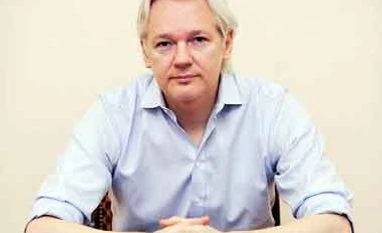 "Britain refuses Ecuador's request to grant diplomatic status to Assange")
WebinarsNew
Deep DiveNew
Explore Business Standard
Assange was granted asylum by Ecuador in August 2012 and has remained sheltered in the Ecuadorian embassy in London to avoid arrest ever since
Britain's government on Thursday turned down a request by Ecuador to grant diplomatic status to the founder of the pro-transparency group WikiLeaks, a Foreign and Commonwealth Office spokesperson in London said.
WikiLeaks' Australian founder, Julian Assange, 46, was granted asylum by Ecuador in August 2012 and has remained sheltered in the Ecuadorian embassy in London to avoid arrest ever since.
"Ecuador recently requested diplomatic status for Assange here in the Britain," the FCO spokesperson said Efe news agency reported. "Britain did not grant that request, nor are we in talks with Ecuador on this matter."
Assange rose to international attention in 2010 after WikiLeaks published leaked military information provided by former United States Army soldier Chelsea Manning, which prompted the US government to launch a criminal investigation into the publisher.
In November 2010, Sweden requested Assange's extradition over allegations of sexual assault and rape, which Assange strenuously denied. He also expressed concern he would be extradited from Sweden to the US because of his role in the Manning leaks.
Assange surrendered himself to Britain police on December 7, 2010 and was held in custody for 10 days before being released on bail. When he was unable to challenge the extradition proceedings, he breached bail and in August 2012 was granted asylum by Ecuador.
Last May, Sweden withdrew its extradition request, but the London Metropolitan Police said his arrest warrant remained in force as Assange had failed to surrender after breaking bail conditions.
Assange is free to abandon the embassy, but he has said he fears Britain police will arrest him and extradite him to the US.
"Ecuador knows that the way to resolve this issue is for Julian Assange to leave the embassy to face justice," the FCO spokesperson said.
On Wednesday, Assange tweeted a picture of himself wearing the Ecuadorian national soccer team's official jersey.
Should Britain finally concede him diplomatic status, he would be able to leave the embassy without risking being arrested on the spot.
Earlier in the week, Ecuadorian Foreign Minister María Fernanda Espinosa said her government was seeking the aid of a third party or country to resolve the current impasse.
First Published: Jan 11 2018 | 7:11 PM IST


 Connect with us on WhatsApp